
Last updated November 23, 2026
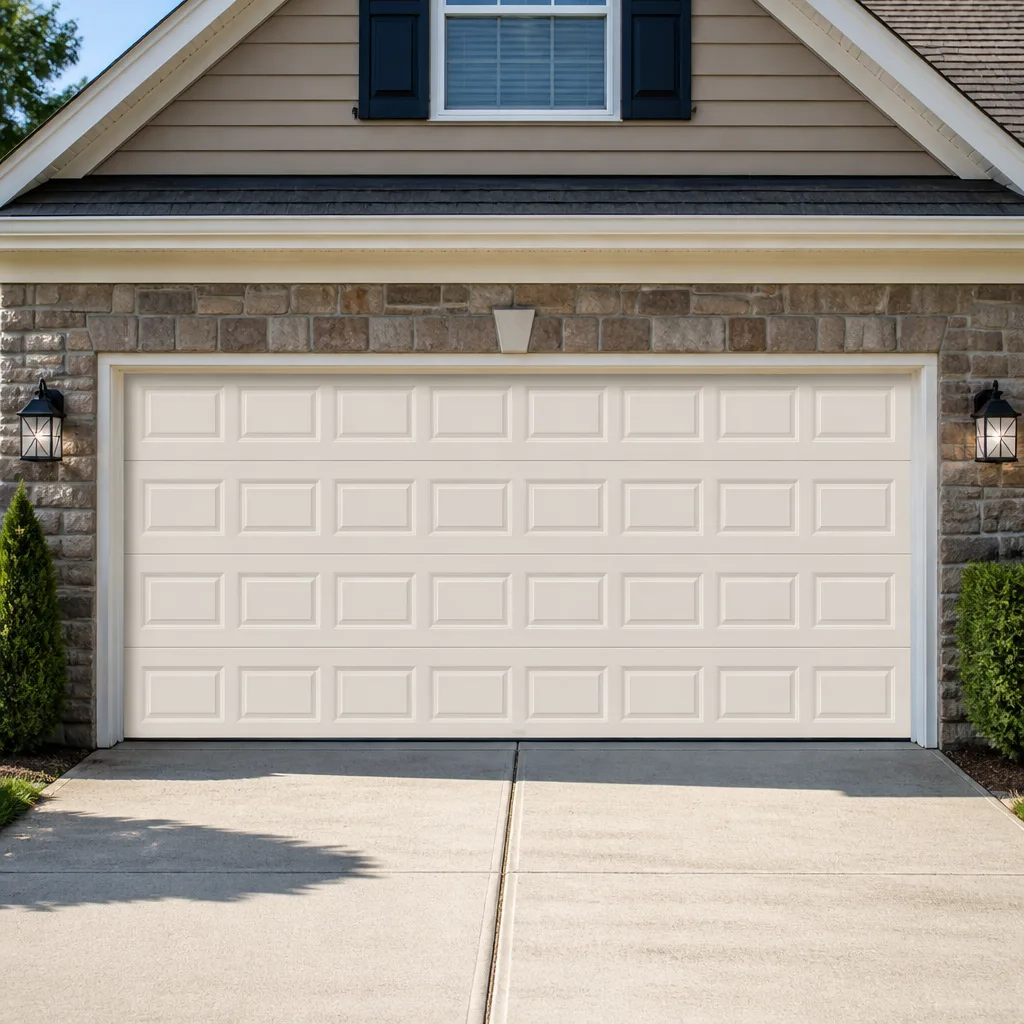 Raised-panel steel
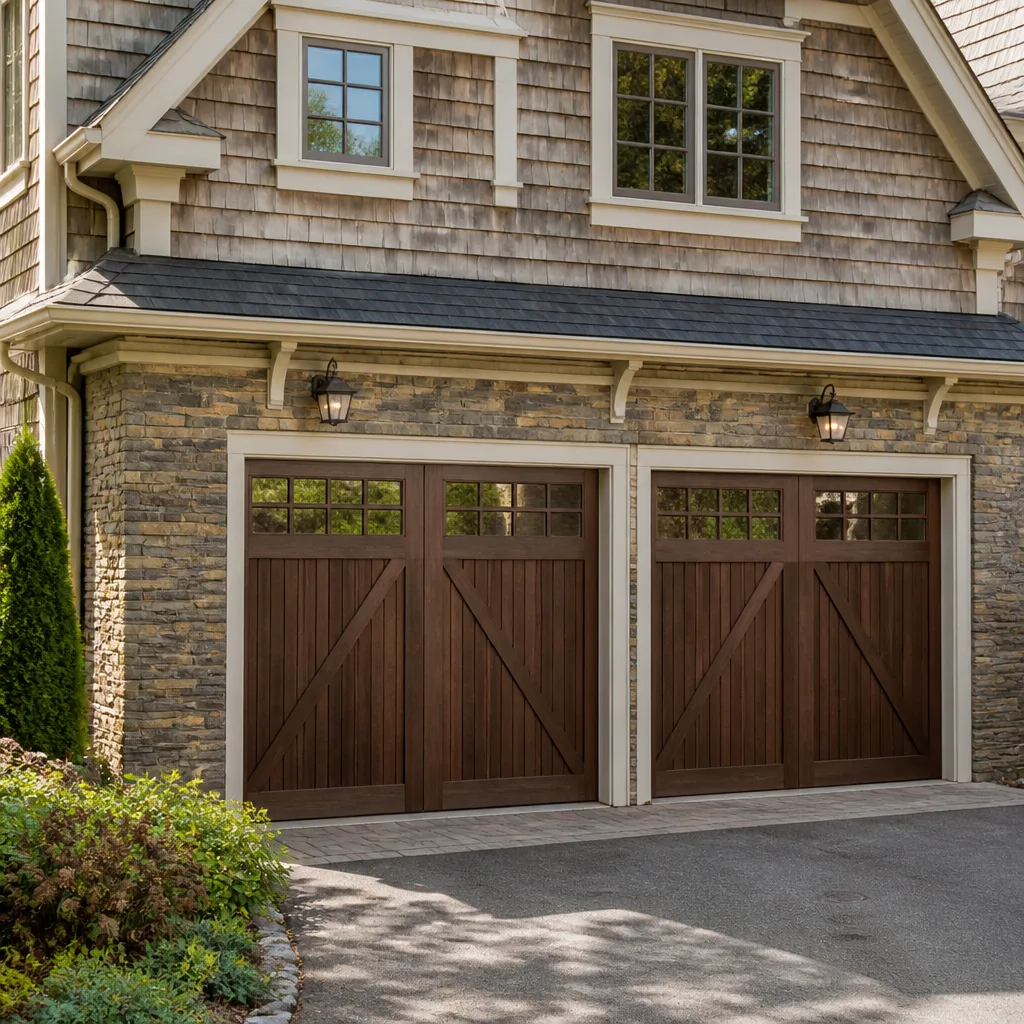 Carriage house
 Modern flush
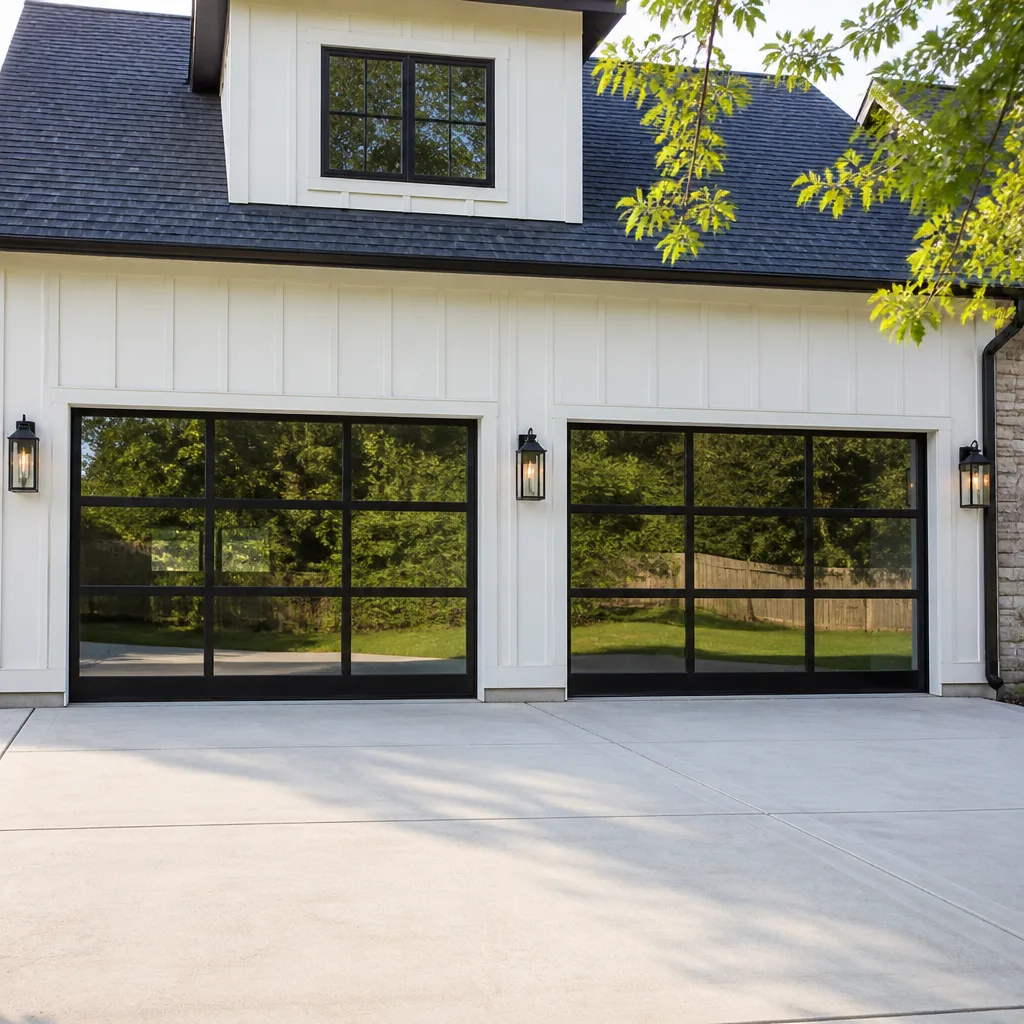 Full-view glass
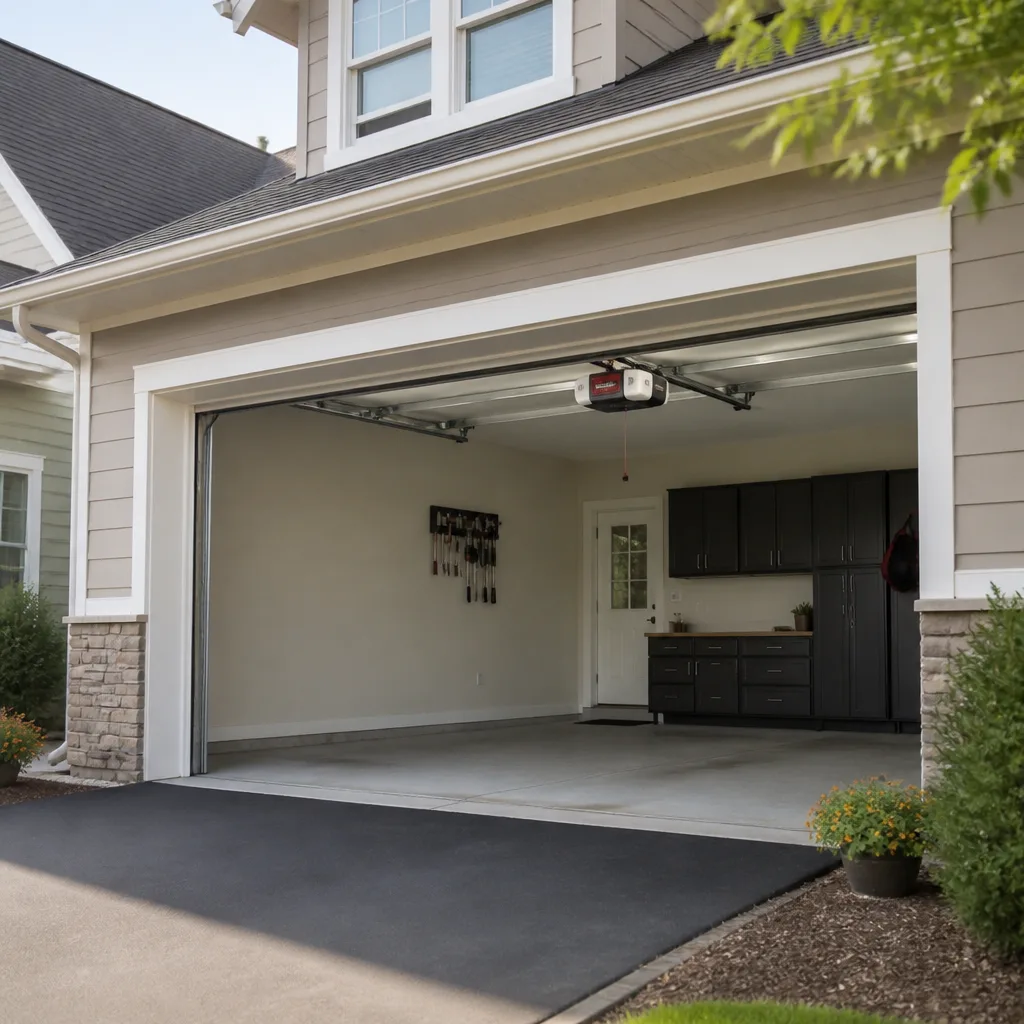 LiftMaster openers
 Chamberlain openers
Full 25-point door and opener safety check with every visit - springs, cables, rollers, tracks, and your LiftMaster or Chamberlain opener included
You get a price before we start. It does not change when the pro arrives.
Get your free estimateGarage Door Emergency Preparedness Guide for Peachtree City Homes
Most Peachtree City homeowners think a garage door emergency starts with a loud bang. More often, it starts with silence. The power goes out during a summer thunderstorm, the opener clicks and does nothing, and the door sits locked with the car inside. The tool that solves this has been hanging on your opener trolley the whole time, and a large share of people who’ve owned their home for more than five years have never once pulled it. This guide walks through the red release cord, the broken-spring drill, storm and wind prep, battery backup openers, and the information card that saves a technician a diagnostic trip. We’ll show you what to know before something fails in Peachtree City.
Quick Answer
To prepare for a garage door emergency in Peachtree City, test your manual release cord while the power is on, note your opener model and spring type on a card stored in the garage, and know whether your opener has battery backup. When a spring breaks, stop operating the door and call for garage door spring repair rather than forcing it. For power-loss emergencies where the door blocks access or security, call (866) 937-8190. We answer 24/7, with fast dispatch from 7am to 7pm, Sunday through Friday.
Styles & brands we work with
- Raised-panel steel
- Carriage house
- Modern flush
- Full-view glass
- LiftMaster openers
- Chamberlain openers
Table of Contents
- How Do You Safely Disengage and Manually Open a Garage Door?
- What Should You Do Immediately After a Spring Breaks?
- Storm Preparedness for Peachtree City Doors
- Battery Backup Openers: Which Models Have Them
- Building an Emergency Information Card for Your Garage
- Warning Signs Before a Failure
- What Does Emergency Garage Door Work Cost in Peachtree City?
- What Happens When You Call for Emergency Service
How Do You Safely Disengage and Manually Open a Garage Door?
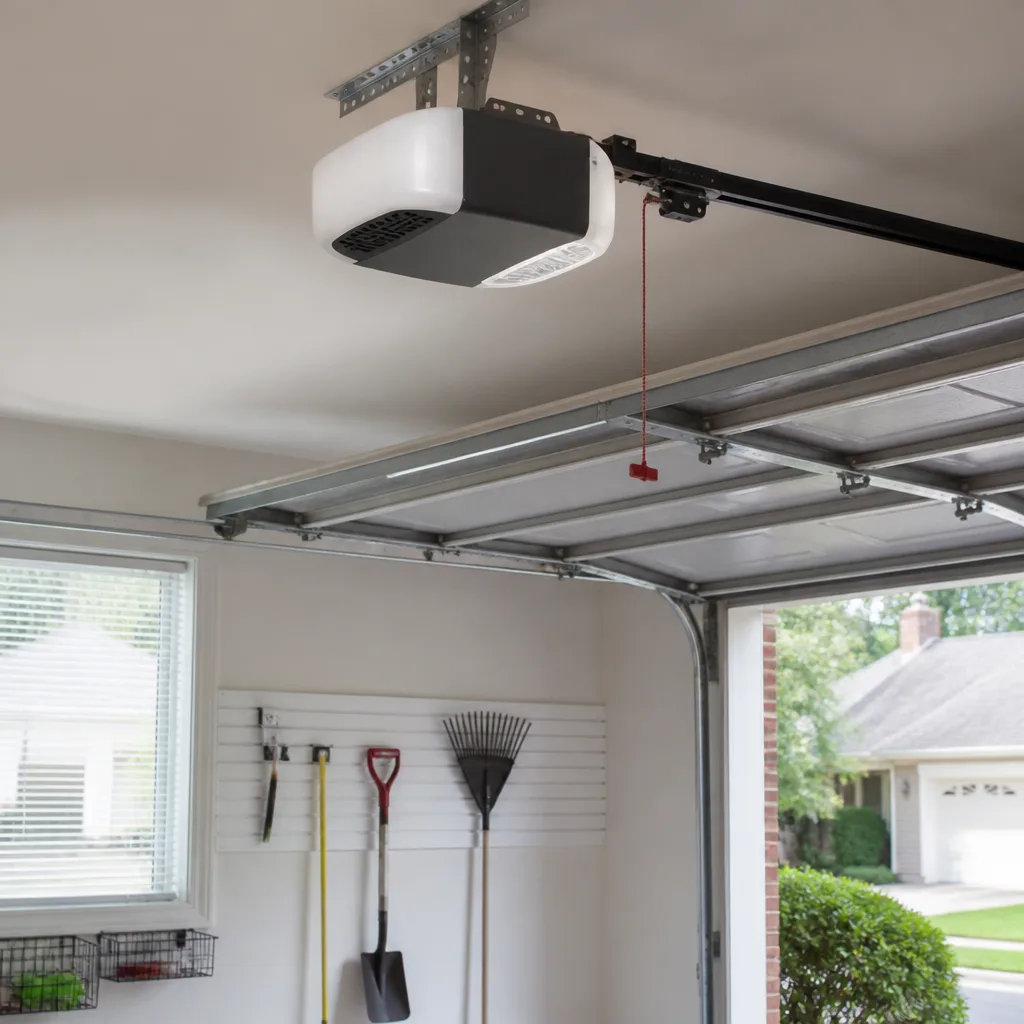
The red release cord is a disconnect, not a door handle. Pulling it detaches the door from the opener carriage so you can lift the door by hand. But there’s a rule most people never hear until it’s too late: never pull the release cord while the door is open and under spring tension. If the springs are carrying the door’s weight and you disconnect the carriage while the door is up, the door can slam down. Always pull the release with the door fully closed and the opener idle.
Here’s the safe sequence:
- Close the door fully using the wall button or remote.
- Unplug the opener or switch off its breaker so it can’t re-engage mid-lift.
- Pull the red cord down and toward the door. You’ll hear the carriage click free.
- Lift the door slowly by the bottom section handle. If it feels far heavier than it should, stop. The springs or rollers are the problem, not the opener.
- Prop the door open with a locking bar or clamp if you need to move the car out, and never walk under a door held up by hand alone.
To reconnect, close the door, pull the cord again so the carriage re-latches, and restore power. Test the opener on a short cycle with the door in view. If the door binds, stops halfway, or the opener strains, that’s a mechanical fault, and it’s time for garage door repair. It’s worth practicing this once while the power is on, so the first time you pull that cord isn’t in the dark.
What Should You Do Immediately After a Spring Breaks?
When a torsion or extension spring snaps, the door becomes very heavy and can drop hard. The sound is a sharp crack, and often the door stops partway open or slams shut. Your job in that moment is to stop operating it. Don’t press the opener button to try again, and don’t force the door up by hand. The remaining spring, or the broken halves of a torsion spring, can let the door fall without warning.
Here’s what to do:
- Keep everyone, especially children, away from the door and clear of the tracks.
- If the door is open, don’t try to force it down. If you need it closed for security, call a technician and describe the position.
- If the door is closed, leave it closed. It’s holding itself in place, which is the safest state.
- Disconnect the opener only if the door is fully closed, using the release cord as described above.
- Unplug the opener so no one triggers it accidentally.
When you call, tell the technician four things: whether the door is open or closed, whether it’s a torsion spring (the horizontal shaft above the door with coiled springs) or an extension spring (the long springs running along the side tracks), the make of your opener, and the door’s approximate width. On Peachtree City homes, we often find a Wayne Dalton or Amarr door with a torsion setup, and knowing the type lets us load the right spring before we arrive. Spring replacement is a safety-critical job; the stored energy in a wound torsion spring can cause serious injury, so this is not a homeowner repair.
Storm Preparedness for Peachtree City Doors
Peachtree City sees its share of severe thunderstorms rolling through Fayette County, and the garage door is one of the largest openings on a house. The question is whether your door is up to the wind. Most residential doors are rated for a given wind load, and a door that’s rated, properly braced, and maintained handles a typical severe thunderstorm far better than a door with a bent track or worn hinges. A full tornado-track event is a different matter, and no residential door is a shelter; head to an interior room.
Here’s how to think about storm readiness:
- Know your door’s rating. Doors carry a wind-load rating, and Clopay and Amarr both publish the ratings for their models. A professional can tell you what yours is rated for.
- Check the tracks and hinges. A track that’s out of alignment or a hinge that’s pulled loose gives wind a starting point. Have those corrected before storm season.
- Look at the bottom seal. A worn seal lets wind-driven rain under the door and stresses the panel edges.
- Clear the area. Keep the driveway and the space in front of the door free of loose objects that can become projectiles in high wind.
If a storm does damage a panel or bends a track, don’t cycle the door until it’s inspected. A misaligned door puts strain on the opener and the springs, and what starts as a dented panel can turn into a snapped spring. For urgent storm-related failures, emergency service is part of what we do, and it’s the kind of thing that’s best assessed before the next round of weather.
Battery Backup Openers: Which Models Have Them
Since 2018, most new openers sold in the U.S. are required to include battery backup, so if your opener was installed in recent years, there’s a good chance it already has a battery. If you’re not sure, look for a small battery compartment on the opener head or a backup battery indicator on the wall control. That’s the single fastest way to know whether a power outage leaves you stranded or not.
Across the brands most common in Peachtree City homes, here’s the general picture:
- LiftMaster offers models with battery backup built in (their quiet, belt-drive and chain-drive lines both have options), and add-on backup units are sold separately for models without it.
- Chamberlain (built by the same parent company as LiftMaster) offers battery backup on many of its belt and chain drive models, with add-on units available for older ones.
- Genie has battery backup options on select models, and a separate unit for others.
- Craftsman and Raynor vary by generation, so the model number on the head unit is the reliable answer.
If your opener doesn’t have backup, an add-on battery unit is a straightforward install and worth having if you’re on a well or a street that loses power in storms. It keeps the door operational for a limited number of cycles during an outage, enough to get the car out and back in. Our technicians have up to 8 years of experience with both legacy and smart-home-compatible systems, so we can confirm what your opener supports before you buy anything. For opener-specific issues, reach out to us for garage door opener repair.
Building an Emergency Information Card for Your Garage
An emergency information card is a small, laminated index card taped inside the garage near the opener head. Its purpose is simple: when something fails and you’re on the phone with a technician, everything they need is right in front of you. It turns a diagnostic conversation into a direct response.
What to document on the card:
- Spring type: torsion (horizontal shaft above the door) or extension (long springs along the sides). Note how many springs.
- Opener make and model: the brand and model number printed on the head unit.
- Serial number: usually on a sticker on the opener or the door’s bottom panel.
- Door brand and width: Clopay, Amarr, Wayne Dalton, or another brand, plus the door’s width.
- Service history: the date of the last spring replacement or opener tune-up, if you know it.
- Emergency contact: the number you’ll call, written in marker, not typed on a phone you can’t reach when you’re standing in a dark garage.
Why bother with paper? Because the moments you need it are the moments you can’t get to your phone’s saved contacts, your email, or a warranty PDF buried three folders deep. A card on the wall survives power outages, dropped phones, and the panic of a snapped spring. Tape it up and update it when you have work done, and any technician, not just us, can respond faster.
Warning Signs Before a Failure
Most garage door failures announce themselves well before they happen, if you know what to feel and hear. The clearest signals come from the door itself, not the opener. A door that’s out of balance, running loudly, or moving unevenly is telling you something is wearing out. Catching these early is far cheaper than an emergency call.
- The door won’t stay halfway up. Lift it by hand (with the opener disconnected and the door closed first, as described above) and let it go at the halfway point. If it drops, the springs are losing tension and need attention.
- A loud bang from the garage. That’s almost always a spring. Don’t run the opener after it happens.
- The door shakes or jerks on the way up. Usually a worn roller, a loose hinge, or a track out of alignment.
- The opener strains or reverses. Could be a mechanical bind or a failing opener; the door needs checking before the opener is blamed.
- Visible gaps in the springs. A torsion spring with a visible gap has likely broken or is about to.
If you notice any of these on a Peachtree City home, it’s worth a call before the door quits entirely. A door that’s binding on a worn roller is one storm or one cold snap away from a snapped spring, and an emergency is always more disruptive than a scheduled repair.
What Does Emergency Garage Door Work Cost in Peachtree City?
Garage door spring repair typically runs $180 to $340 for a single spring, and a matched pair is usually replaced together, so a pair costs about twice that. Opener repair or replacement and door service vary by what’s failing. The written estimate sets the final price, and it’s quoted and agreed before any work starts, so you know the number before anything is touched.
- Single torsion spring replacement: roughly $180 to $340.
- Matched pair of springs: about twice the single-spring range, since pairs are replaced together.
- Opener repair or replacement: priced by job after the estimate, based on the model and the fault.
- Track, roller, and hinge service: priced by job after the estimate.
Those ranges are typical for the Peachtree City market, and they’re estimates, not quotes. When the technician sees the door and opener in person, you get a written price before work starts. That’s the number that holds. If you’ve been told a range on the phone and the on-site estimate is higher, you’ll see why and can decide before anything proceeds. For an exact quote, call (866) 937-8190. Estimates are free.
What Happens When You Call for Emergency Service
When you call, the first thing the technician wants to know is the door’s position and what it’s doing. A door stuck open is a security issue; a door stuck closed with a car inside is an access issue; either way, the faster we know the state, the faster we can respond. Have your information card handy if you’ve made one.
Here’s how a call typically goes:
- You describe the symptom: bang, no movement, opener clicks but doesn’t run, door halfway up.
- We ask about the spring type and opener model, which you’ll have on the card.
- We book a dispatch. We answer 24/7, and crews are dispatched Sunday through Friday, from 7am to 7pm.
- The technician confirms the diagnosis on site, gives you a written price, and only then starts work.
For a jammed, dead, or failed door that’s blocking access or leaving the home exposed, that’s an emergency in the practical sense, and it’s the reason we keep emergency service in our core offering rather than treating it as an add-on. One call covers the range of what can go wrong, from a snapped spring to a dead opener to a door that won’t close. If the failure is on a Saturday, call and we’ll book you into the next opening, Sunday from 7am to 7pm.
Common Mistakes to Avoid
- Pulling the release cord while the door is open. This is the most dangerous mistake in this guide. The door can slam down under its own weight, and it happens fast.
- Running the opener after a spring breaks. The opener will strain against a door it can’t lift, and it can burn out the motor or strip the gear. Stop and call.
- Forcing a stuck door by hand. A door that resists isn’t a muscle problem; it’s usually a track, roller, or spring fault that gets worse with force.
- Ignoring battery backup. If you’re in Peachtree City and your opener doesn’t have it, a storm-related outage leaves you manual-only. Check the model before the next storm.
- Trying to wind a torsion spring yourself. The stored energy in a wound spring can cause serious injury. This isn’t a homeowner repair, full stop.
- Not knowing your door’s wind rating. In Fayette County storm season, a door rated for less than your area’s wind load is a weak point, and most homeowners have never looked it up.
- Skipping the information card. Without the model and spring type, a technician may need to diagnose from scratch, which costs time you don’t have in an emergency.
See the difference
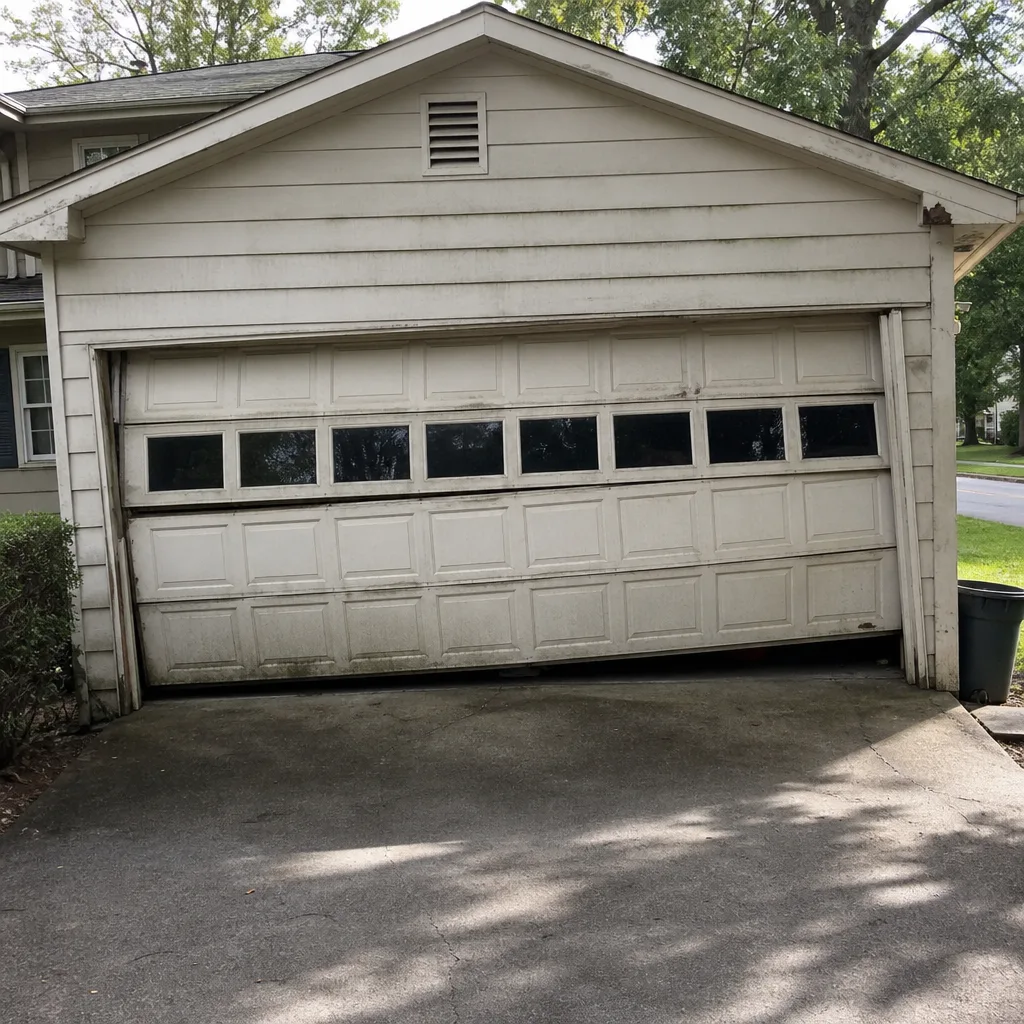 Before
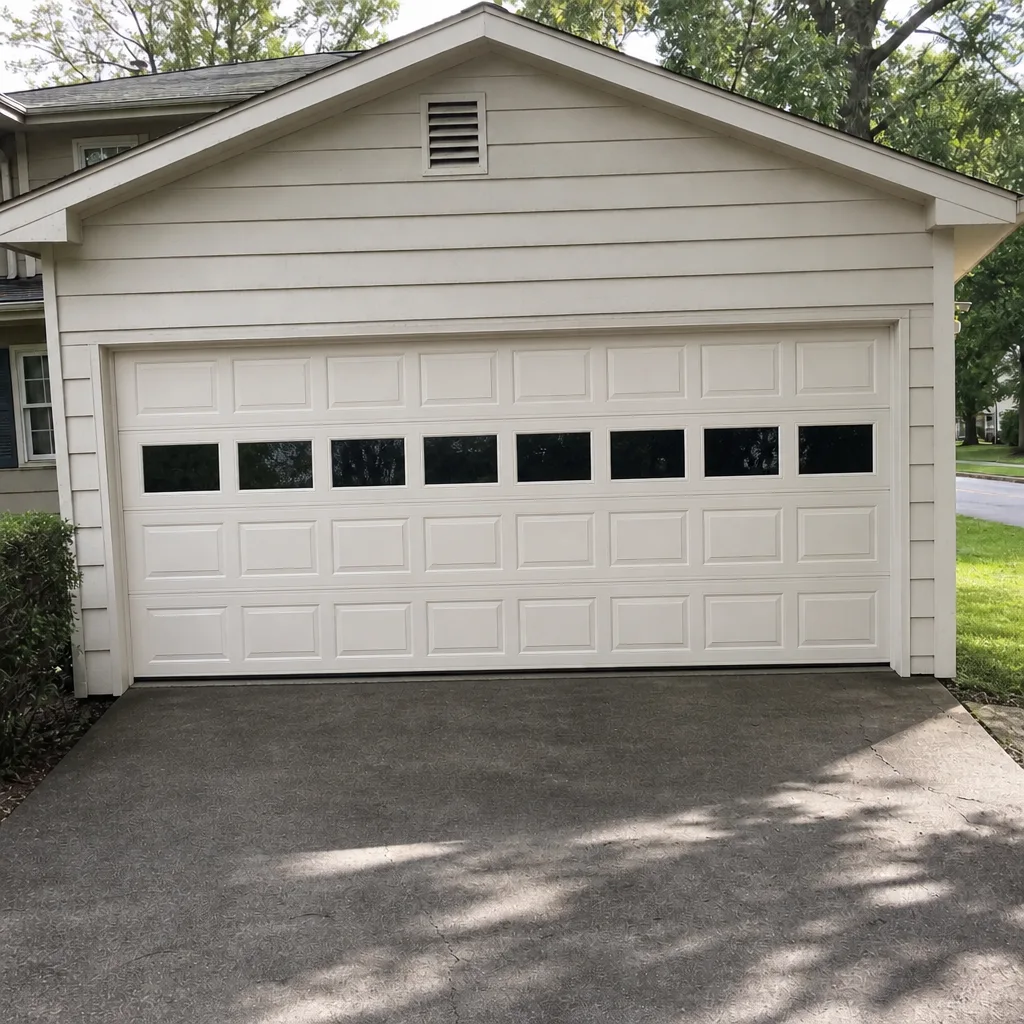 After
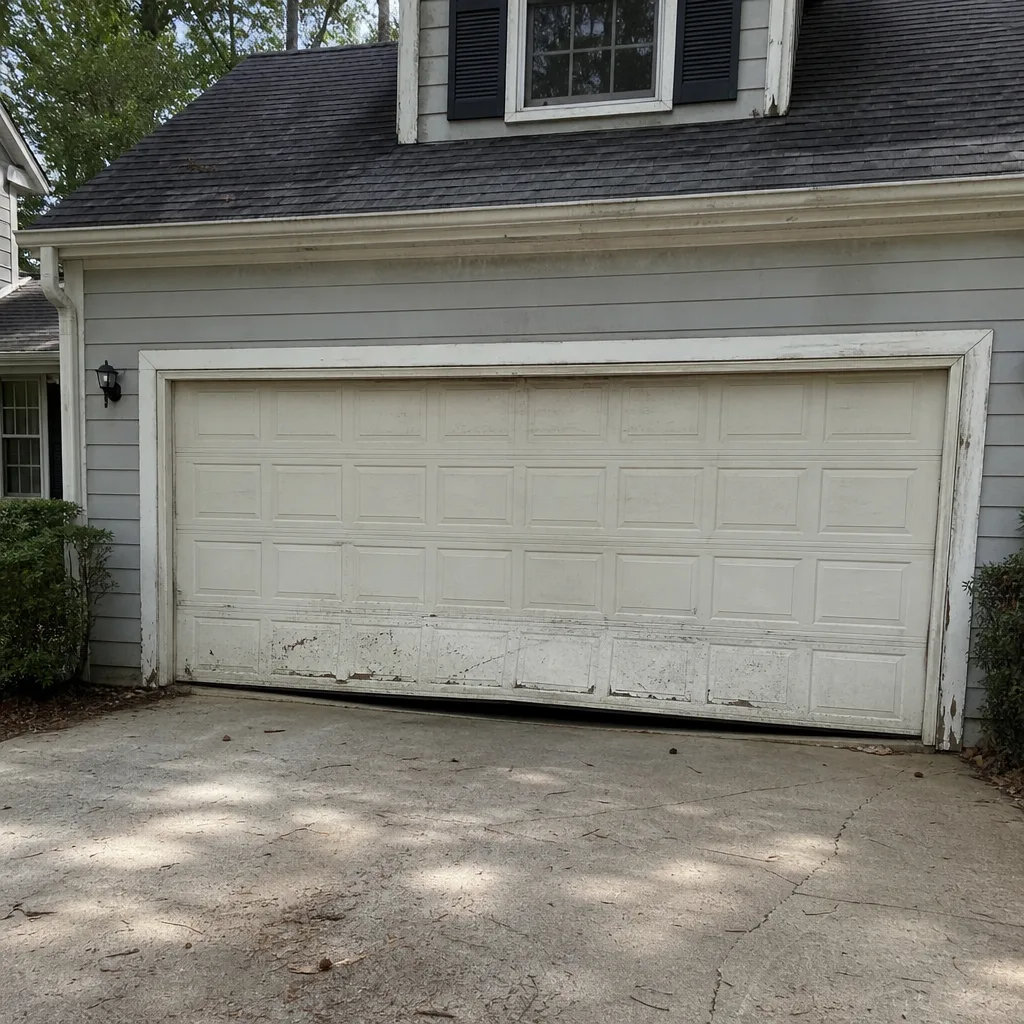 Before
 After
 Before
 After
When to Call a Professional
Call a professional when a spring has broken, when the door is stuck open or closed, when the opener runs but the door doesn’t move, or when you see a bent track or a door that’s come off its rollers. Call when the door won’t stay up when you lift it, or when the opener strains and reverses. These are all jobs that put fingers, hands, and heads near stored energy or heavy moving parts. The manual release is the one thing you can safely handle yourself; everything past that is a trained technician’s work. Peachtree City Garage Door Repair offers free estimates in Peachtree City. Call (866) 937-8190. We answer 24/7, with fast dispatch from 7am to 7pm, Sunday through Friday. Our technicians have up to 8 years of experience across LiftMaster, Chamberlain, Genie, Clopay, Amarr, Wayne Dalton, Craftsman, and Raynor systems.
Frequently Asked Questions
Garage door spring repair typically runs $180 to $340 for a single spring, and a matched pair costs about twice that because pairs are replaced together. The written estimate sets the final price, and it’s agreed before work starts. Call (866) 937-8190 for an exact quote. Estimates are free.
Same-day service is often possible for urgent failures. Call (866) 937-8190 to check availability for your door. We answer 24/7, with fast dispatch from 7am to 7pm, Sunday through Friday.
Yes, if the door is fully closed and the opener is idle. Never pull the release cord while the door is open and under spring tension, because the door can slam down. Pull it only with the door closed, then lift by hand slowly.
No. The on-site diagnosis produces a written estimate, and that price is agreed before any work starts. If something extra is found, you’ll see it in the written price and decide before work proceeds. Call (866) 937-8190 for an exact quote.
Many LiftMaster and Chamberlain models include battery backup, and add-on units are available for models without it. The model number on the opener head is the reliable way to confirm what yours has.
Yes. The local pro we connect you with is licensed and insured as their state requires. Call (866) 937-8190 to discuss your door.
Keep everyone clear, don’t force it, and unplug the opener so it can’t cycle unexpectedly. If the door blocks security or access, call (866) 937-8190. We answer 24/7, with fast dispatch from 7am to 7pm, Sunday through Friday.
We’re closed on Saturdays. If a door fails on a Saturday, call and we’ll book you into the next opening, Sunday from 7am to 7pm.
The Bottom Line
Most garage door emergencies in Peachtree City come down to a handful of skills and one habit. Know how to use the red release cord with the door closed, know what to do when a spring breaks (stop operating, call, don’t force it), and know your door’s wind rating before storm season. Add battery backup if your opener doesn’t have it, and put an information card on the wall so the model and spring type are never a mystery in the dark. Those steps turn a crisis into a scheduled repair, and they cost nothing but a few minutes now.
Ready When the Door Isn’t
If your door is stuck, jammed, or won’t close, we’re here to get you back up and running. Peachtree City Garage Door Repair handles spring replacement, opener repair, storm damage, and full door installation. For help rooted in Peachtree City Garage Door Repair, call (866) 937-8190 for a free estimate. We answer 24/7, with fast dispatch from 7am to 7pm, Sunday through Friday. The written quote is the price, and you’ll have it before any work starts.
Written by the team at Peachtree City Garage Door Repair.