
Last updated November 23, 2026
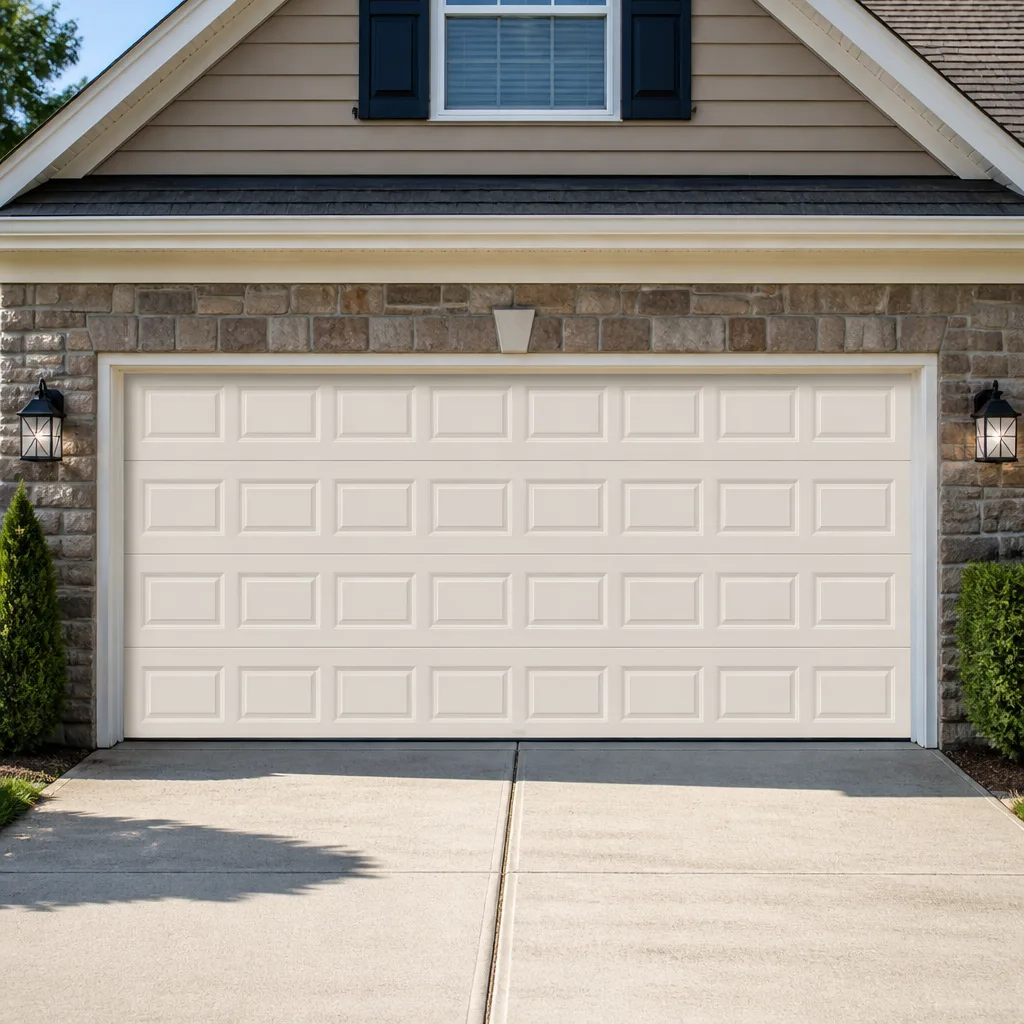 Raised-panel steel
 Carriage house
 Modern flush
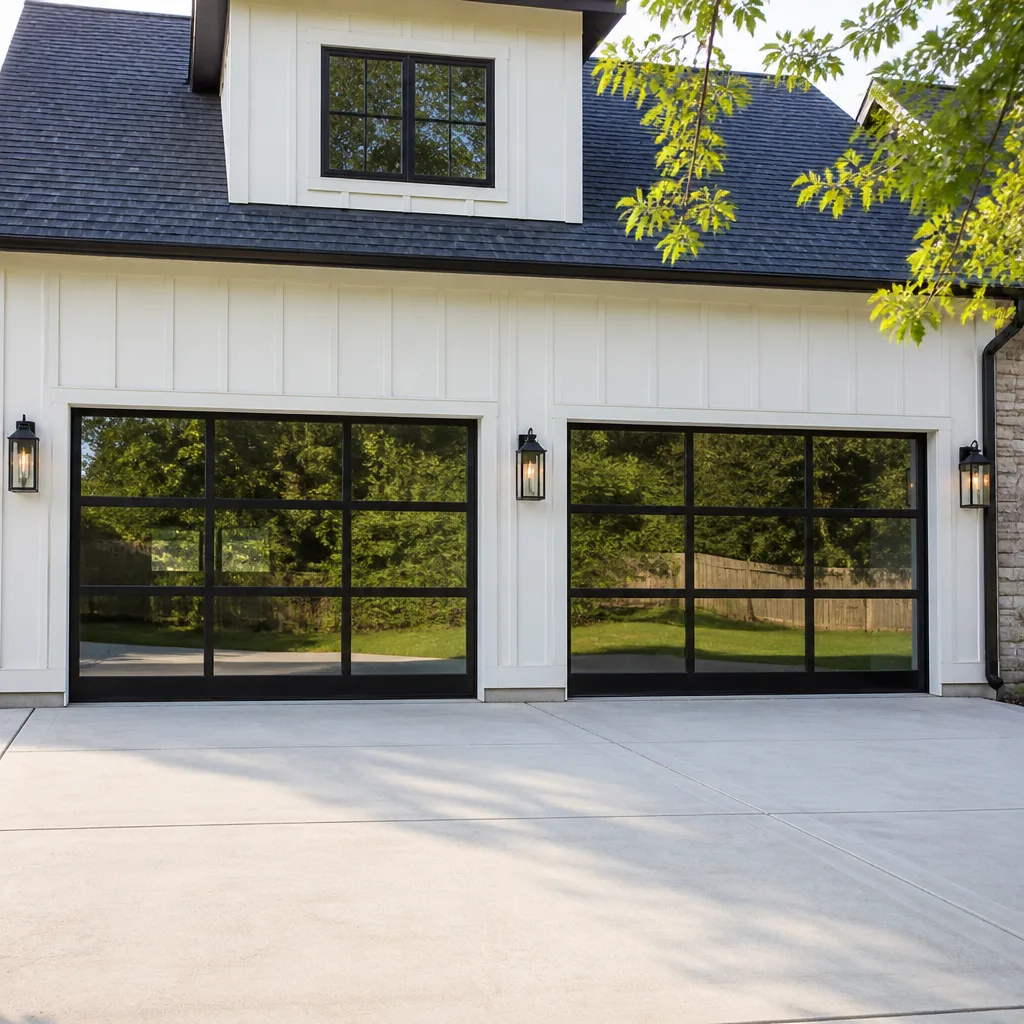 Full-view glass
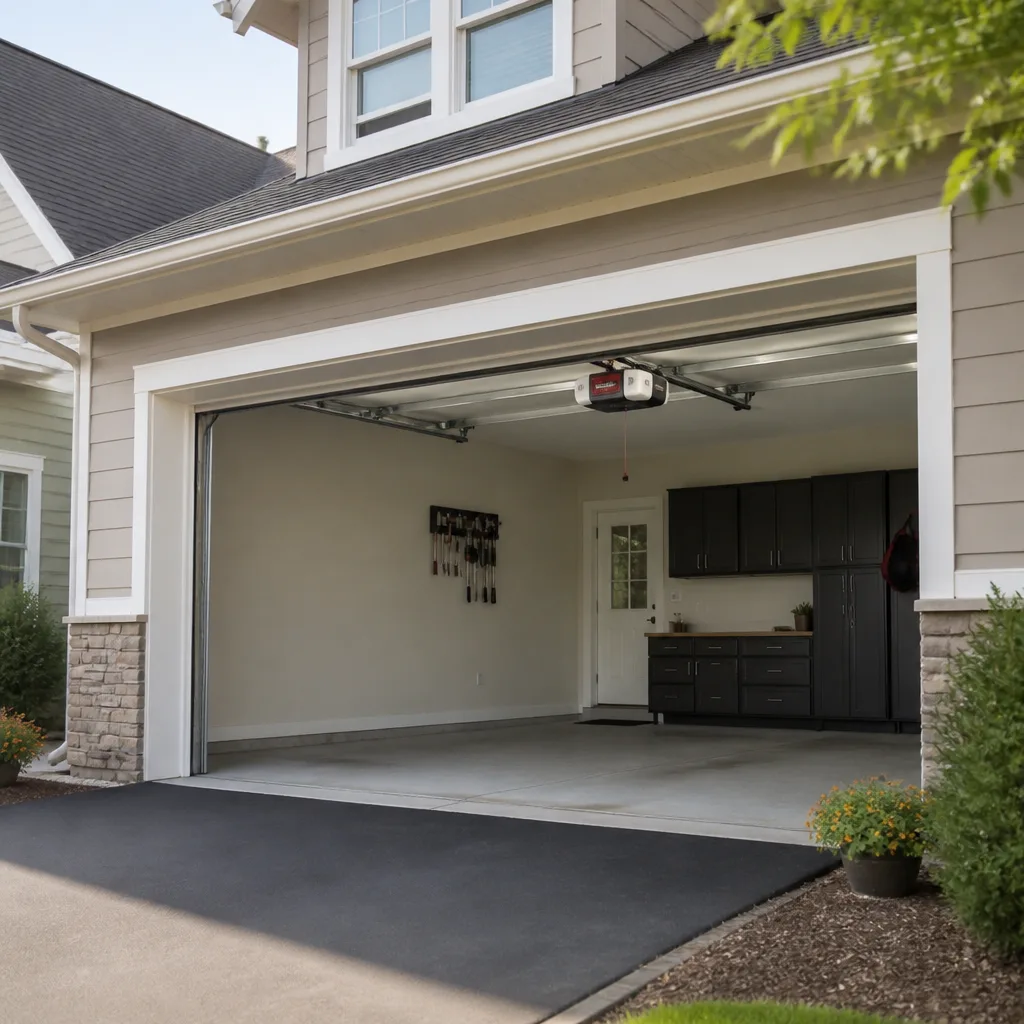 LiftMaster openers
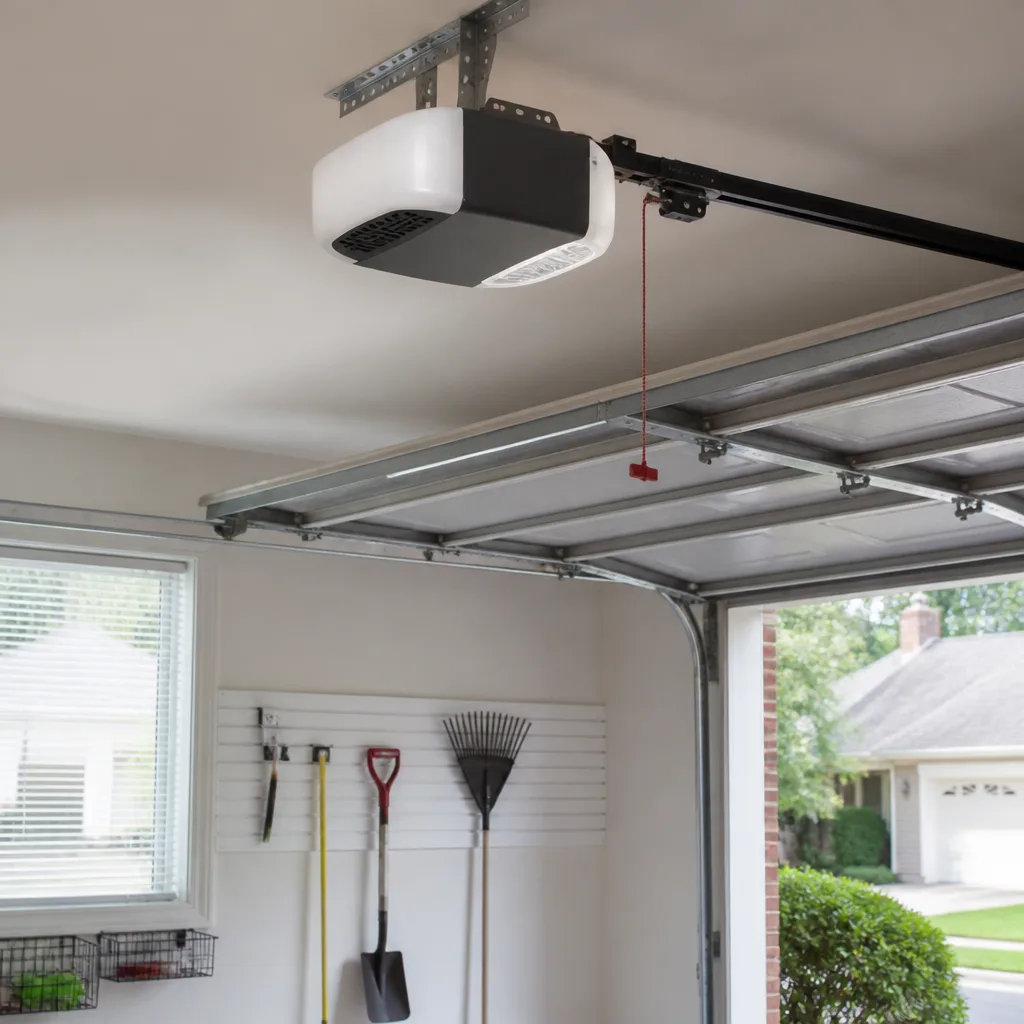 Chamberlain openers
Full 25-point door and opener safety check with every visit - springs, cables, rollers, tracks, and your LiftMaster or Chamberlain opener included
You get a price before we start. It does not change when the pro arrives.
Get your free estimateGarage Door Repair Maintenance Schedule: What to Do and When
Oiling a spring that’s already most of the way through its cycle life feels productive. It changes nothing about the day the door stops opening. That’s the trap with garage door maintenance: most advice tells you to lubricate everything monthly and call it done, when the parts that actually strand homeowners fail on wear cycles, not on the calendar. A torsion spring has a fixed number of turns in it. Rollers wear out at their own rate. An opener ages on its own schedule. In this guide we’ll lay out a maintenance schedule built around those real wear rates, show you the checks that actually predict failure, and explain the seasonal tasks that matter in Peachtree City’s humid summers and cooling falls.
Quick Answer
A garage door doesn’t need monthly attention. It needs four scheduled checkpoints a year – one each season – plus a 90-second spring inspection once a month. That’s the whole schedule: inspect springs and cables monthly, lubricate moving parts every season, test the balance and safety reverse every three months, and have a professional service the door and opener once a year. Everything else is reacting to a problem, not preventing one.
Styles & brands we work with
- Raised-panel steel
- Carriage house
- Modern flush
- Full-view glass
- LiftMaster openers
- Chamberlain openers
Table of Contents
- Why Garage Door Maintenance Is About Cycles, Not Dates
- Component Lifespans: How to Estimate Where Your System Sits
- The Monthly 90-Second Spring Inspection
- The Seasonal Lubrication Schedule (And What Not to Use)
- The Balance and Safety Reverse Test
- Peachtree City Seasonal Tasks: Pre-Summer and Fall
- Building a Maintenance Log That Speeds Up Service Calls
- What an Annual Professional Service Should Cover
Why Garage Door Maintenance Is About Cycles, Not Dates
Every moving part on a garage door has a design life measured in cycles, and one cycle is one open and one close. A household that leaves and returns twice a day logs about 1,500 cycles a year. A household where someone works from home and the door runs six or eight times a day logs closer to 3,000. Same door, same neighborhood in Peachtree City, and one homeowner reaches a spring’s end of life twice as fast as the neighbor next door. That’s why a calendar-based maintenance plan misses the point. The spring doesn’t know what month it is. It knows how many turns it has made.
This matters most for springs, because springs are the part that fails catastrophically and without warning. A torsion spring rated for 10,000 cycles will usually give you something close to that, but not always in a straight line. Over time the metal fatigues, and the last few hundred cycles happen faster than the first few thousand. A door that has been smooth for years can snap a spring in a single morning.
Rollers, hinges, and bearings wear more gradually and give you signals before they quit – a rattle, a shudder, a squeal. Openers sit somewhere in between, usually lasting 10 to 15 years before the logic board, gear, or motor gives out.
The practical takeaway: track cycles, not weeks. If your door in Peachtree City runs more than about four times a day, shorten every interval in this guide by roughly a third. If it runs once or twice a day, you can stretch the light tasks and lean on the annual professional service to catch what you miss. When a spring does reach the end of its life, garage door spring repair is a specialist job – we’ll get to why later.
Component Lifespans: How to Estimate Where Your System Sits
Here are the design-life benchmarks we work from when a technician opens up a door in Peachtree City. These are typical figures, not guarantees, and cycle count matters more than anything else.
- Torsion and extension springs: about 10,000 cycles. Standard springs hit this in roughly 7 to 10 years at average use. Heavier doors and high-cycle springs stretch that, but standard springs on a busy door can go in five.
- Nylon and steel rollers: about 20,000 cycles, but rollers often fail on condition before cycle count. Nylon rollers crack and flat-spot; steel rollers seize.
- Hinges and bearings: 15,000 to 20,000 cycles, longer if lubricated on schedule and shorter if the door is out of balance and they’re carrying extra load.
- Openers: 10 to 15 years for the motor and logic board, with the gear and sprocket often the first thing to go on a chain-drive unit.
- Cables: 10,000 cycles or so, but cables should be replaced whenever a spring is replaced – they’ve been under the same tension and have the same fatigue.
- Weather seals and bottom rubber: 5 to 7 years in a climate with hot, humid summers. Peachtree City’s summer humidity and sun exposure dry out and crack the bottom seal faster than a drier climate would.
You can estimate where your door sits without a cycle counter. Count how many times the door opens and closes on a typical day over a week, multiply by 365, and you have a rough annual cycle count. Look at the springs: if you can see a service sticker or a cycle rating on the coil, that’s your starting point. If not, the door’s age and your household pattern will tell you most of what you need to know.
For openers, note the brand and model on the inside of the motor housing. We’re factory-familiar with LiftMaster, Chamberlain, Genie, Clopay, Amarr, Wayne Dalton, Craftsman, and Raynor systems, and it genuinely helps to know which system you’re dealing with. A Genie opener’s gear assembly wears differently from a LiftMaster chain drive, and a Wayne Dalton door’s torsion setup may call for a different service approach than a Clopay. Your garage door opener repair visit goes faster when the technician already knows what’s inside the housing before arriving.
The Monthly 90-Second Spring Inspection
This is the check most homeowners skip and the one that actually prevents being stranded. It takes about 90 seconds once a month and doesn’t require touching anything under tension. You’re looking, not adjusting.
- Look at the torsion spring above the door. On a standard torsion setup, the spring sits on a metal shaft above the header. Look along the coil for a visible gap – a clean separation anywhere in the coil means the spring has failed. Stop there and call a professional.
- Look at the extension springs on sides of the door if you have them. Extension springs run along the tracks. Check for gaps, stretched sections, or a spring that’s visibly lost its coil shape. A missing or broken safety cable that runs through the center of the spring is a problem too.
- Look at the cables. The thin steel cables that run from the bottom corners up toward the springs should be straight and taut, with no fraying, kinks, or a cable that’s come off its drum. A cable wound wrong on a drum is a failure waiting to happen.
- Listen. Stand inside the garage and open the door once. A sharp pop, a loud bang, or a door that feels suddenly heavy at the halfway point is a spring failure signal. A steady groan is usually lubrication; a pop is mechanical.
- Watch the door go up. Does it come up crooked? Does one side lag? That can mean a spring that’s lost tension on one side of a two-spring setup, or a failing cable.
None of these checks involve putting your hands near the springs, cables, or brackets under tension. Torsion springs hold an enormous amount of stored energy and can cause serious injury if adjusted by an untrained hand. If a check turns up anything concerning, treat it as a call-the-professional item and don’t attempt a fix. That’s the whole point of a 90-second visual: to catch the warning before the call.
We answer 24/7 at Peachtree City Garage Door Repair. Fast dispatch from 7am to 7pm, Sunday through Friday. When a spring check comes back bad, the earlier you call, the less time the door spends stuck.
The Seasonal Lubrication Schedule (And What Not to Use)
Lubrication is where most homeowners do the wrong thing with the best of intentions. WD-40 and general-purpose grease are the two most common mistakes. WD-40 is a solvent-based product that displaces moisture and cleans, but it doesn’t leave a lasting film – it actually strips the factory lubricant out of rollers and hinges over time. General-purpose grease attracts dust and grit, which turns into a grinding paste inside a roller bearing. Both shorten component life.
What works: a white lithium grease or a dedicated garage door lubricant for hinges, rollers, and bearings, and a silicone-based spray for the tracks. Apply sparingly. Once a season per component is plenty at average use, and less at a single-car door that runs twice a day.
The seasonal sequence, from the door down:
- Rollers and hinges. Spray a light film of white lithium grease onto the roller stems and hinge pivot points. Don’t spray into the roller wheel itself – that’s a sealed bearing on nylon rollers, and grease just collects grime.
- Torsion bar bearings. One small drop at each bearing plate. Not more – excess drips onto the door.
- Track surface. Wipe the vertical and horizontal tracks with a silicone spray on a rag. Don’t grease the tracks themselves; the rollers need to roll, not slide.
- Opener chain or belt. A light coat of chain lubricant on a chain drive, sparingly. Belt drives need nothing – keep them clean and dry.
- Weather seals. A silicone spray on the bottom rubber keeps it pliable through Peachtree City’s humid summers. This one alone extends seal life noticeably.
Skip the springs themselves. A spring doesn’t benefit from being oiled – it’s not a bearing, and oiling it just collects dust on a high-tension component you shouldn’t be reaching for anyway. If your springs look dry or rusty, that’s a reason to have a technician look at them, not a reason to apply oil.
While you’re lubricating, glance at the door panel edges and the bottom seal. A cracked seal lets water and insects in and contributes to a draft in winter. A Clopay or Amarr steel door generally holds up well, but the seals and trim are softer and wear faster than the door itself.
The Balance and Safety Reverse Test
The balance test tells you whether your springs are still doing their job at the right tension. The safety reverse test tells you whether the opener will stop and reverse if something is under the door. Do both every three months, and always after any lubrication or seasonal adjustment.
Balance test:
- Close the door and disconnect the opener with the manual release cord (the red handle hanging from the opener rail).
- Lift the door halfway by hand and let go. A balanced door should hold position or drift very slightly. A door that drops is under-sprung; a door that rises on its own is over-sprung.
- Lift the door fully open and let go. It should stay open. Close it and check that it settles onto the floor with slight resistance from the springs.
- Reconnect the opener by running the door until the carriage re-engages.
If the balance test fails, the springs need a trained hand to adjust or replace. Don’t try to adjust torsion tension yourself – this is the single most dangerous adjustment on a garage door.
Safety reverse test:
- Place a small object (a roll of paper towels works well) flat on the floor under the middle of the door path.
- Close the door using the wall button or remote.
- When the door contacts the object, it should reverse and return to the open position. If it doesn’t, the opener’s force setting is too high or the safety sensors have an issue.
- Also check the photo-eye sensors – the small units near the floor on each side of the door. Wave something in front of them while the door is closing; it should reverse immediately.
If the safety reverse fails, stop using the opener until it’s fixed. Most modern openers, including smart-home-compatible units, respond to adjusting force limits on the control panel, but the settings and specifics vary. On a LiftMaster or Chamberlain, for example, the settings are reached through a specific sequence on the wall control; on a Genie the approach is different. If you’re not certain what you’re doing, have a technician set it – it takes a few minutes and is not a place to guess.
Peachtree City Seasonal Tasks: Pre-Summer and Fall
Two seasonal tasks in Peachtree City pay off more than the rest, and both are driven by the local climate rather than a generic calendar.
Pre-summer humidity prep (late spring). Peachtree City summers are hot and humid. Humidity is hard on metal that’s under tension – springs and cables can develop surface rust, hinges can stiffen, and the bottom seal can take on moisture and swell. Before the hot months:
- Wipe down spring coils and cables with a dry cloth to remove grit and check for rust spots. Rust pits shorten spring life.
- Refresh the silicone spray on the bottom seal and side weather seals so they stay pliable through July and August.
- Lubricate hinges and rollers; the summer heat dries out lighter greases quickly, so the pre-summer application gets you through the worst of it.
- Check for gaps around the door perimeter where hot, humid air gets in. The garage stays cooler and drier when the seals are tight.
Fall rebalancing (October and November). When temperatures drop, metal contracts – and that includes your springs. A door that was perfectly balanced in July can feel slightly under-sprung by November, which means the opener has to work harder to lift it. That extra load is what shortens opener life. Run the balance test again in the fall and, if the door now drops on the halfway test, that’s the tension drifting with the season. A trained technician can recalibrate the springs. Sometimes the answer is a professional rebalance; sometimes it’s replacement if the spring is close to its cycle limit anyway.
Fall is also the right time to check the door panel for any leaks or drafts before winter. A Peachtree City door on a north-facing wall will pick up more wind-driven rain than one on the south side, and weather stripping takes more of a beating there. Look at it once a year rather than waiting for a wet floor in the garage.
Building a Maintenance Log That Speeds Up Service Calls
A simple maintenance log turns every future service call into a faster, cheaper visit. It’s a two-minute habit with real payoff.
What to record, and where:
- Door and opener identification. Brand, model number, and serial for both. Look at the motor housing label, the door panel edges, and the manufacturer plate on the track. If it’s a Clopay, Amarr, or Wayne Dalton door, note the model. If the opener is a LiftMaster, Chamberlain, Genie, Craftsman, or Raynor, note the model and the manufacturing date on the label.
- Installation date if known. Look for a sticker on the door or the opener rail. If there isn’t one, note when you moved in and whether the door was new at that point.
- Monthly spring check results. “Springs intact, no visible gaps, cables taut” is enough. Note anything unusual.
- Seasonal lubrication dates. A line in your log: “Lubricated rollers, hinges, bearings March and September.”
- Balance and safety reverse test results. “Balance test passed, safety reverse passed” once a quarter.
- Any repair or service visit. What was done, who came, what parts were replaced. That last one matters when the next technician can see that a spring was replaced two years ago and still has plenty of life.
Keep the log in the garage in a plastic sleeve, or type it into a note on your phone. Either works. The point isn’t the format; it’s having a real history the next time you call.
When you call Peachtree City Garage Door Repair and can say “the springs were replaced in 2023 and the balance test just started failing,” the technician arrives already knowing the likely cause. That saves time on the visit. If you don’t have a log, don’t worry – the technician will build a picture from the door itself. But with the log, you get there faster.
What an Annual Professional Service Should Cover
Once a year, a garage door specialist should do a full inspection that goes beyond what you can safely check yourself. Here’s what should be on the list.
- Spring and cable assessment under load. Checking for fatigue, rust, and winding tension that’s no longer matched to the door weight.
- Roller and bearing condition. Spinning each roller, checking for flat spots and seized bearings, testing hinge pivot movement.
- Track alignment. Plumb, level, and free of dents that pull the door off course. Bent tracks are one cause of premature roller failure.
- Opener inspection. Force settings, travel limits, chain or belt tension, gear condition, and safety reverse function tested with a real obstruction.
- Weather seal and bottom rubber. Replaced if cracked or hard.
- Balance test. The same test you run every three months, done by a trained hand with a proper read on the results.
- Tightening and adjustment. Everything from header brackets to hinge screws. Loose hardware on a vibrating door is one of the most common reasons doors start making noise.
If your door is a Clopay or Amarr installed on a Peachtree City home, the technician should be familiar with the specific hinge hardware and panel construction – not every door brands use the same replacement parts. Same for openers: a LiftMaster vs. a Wayne Dalton-supplied opener may need different adjustments or parts.
The annual service is where you catch the small problems before they become the emergency repair. If a technician finds that a spring is six months from the end of its life, you get to schedule the replacement rather than discovering it at 7am on a Sunday when the car is in the garage and the door won’t move.
Our technicians have up to 8 years of experience and work across LiftMaster, Chamberlain, Genie, Clopay, Amarr, Wayne Dalton, Craftsman, and Raynor systems. That matters because an annual inspection on a Genie opener isn’t the same procedure as on a Chamberlain, and the diagnosis runs from the actual hardware rather than a generic checklist.
Common Mistakes to Avoid
- Lubricating the tracks. Tracks should be clean and dry with a light silicone spray, never greased. Grease on a track collects grit and turns the roller into a grinding wheel. It’s one of the most common causes of premature roller wear on Peachtree City doors.
- Using WD-40 as a lubricant. It’s a cleaner and moisture displacer, not a lasting lubricant, and it strips the factory film from rollers and hinges. Use a white lithium or dedicated garage door lubricant instead.
- Skipping the spring visual because “the door still works.” A spring can be 90% through its life and the door opens perfectly until the morning it doesn’t. The visual is the only early warning you get.
- Adjusting torsion springs yourself. Torsion springs store an enormous amount of energy. Panels and doors can be damaged, and the risk of serious injury is real. A broken or out-of-balance spring is a technician call, no exceptions.
- Testing safety reverse with an object that’s too small or too soft. A piece of paper will not reliably trigger the safety reverse. Use something with weight, like a rolled towel or a small box.
- Ignoring fall noise and shake. A door that suddenly rattles in October after being quiet in July is telling you the springs have drifted out of balance with the temperature. Left alone, it wears the opener.
- Waiting for a full breakdown to call. Emergency repairs cost more in time and inconvenience than a planned replacement, and there’s no scheduling flexibility once the door is stuck. If your maintenance log says the springs are near the cycle limit, plan the replacement.
See the difference
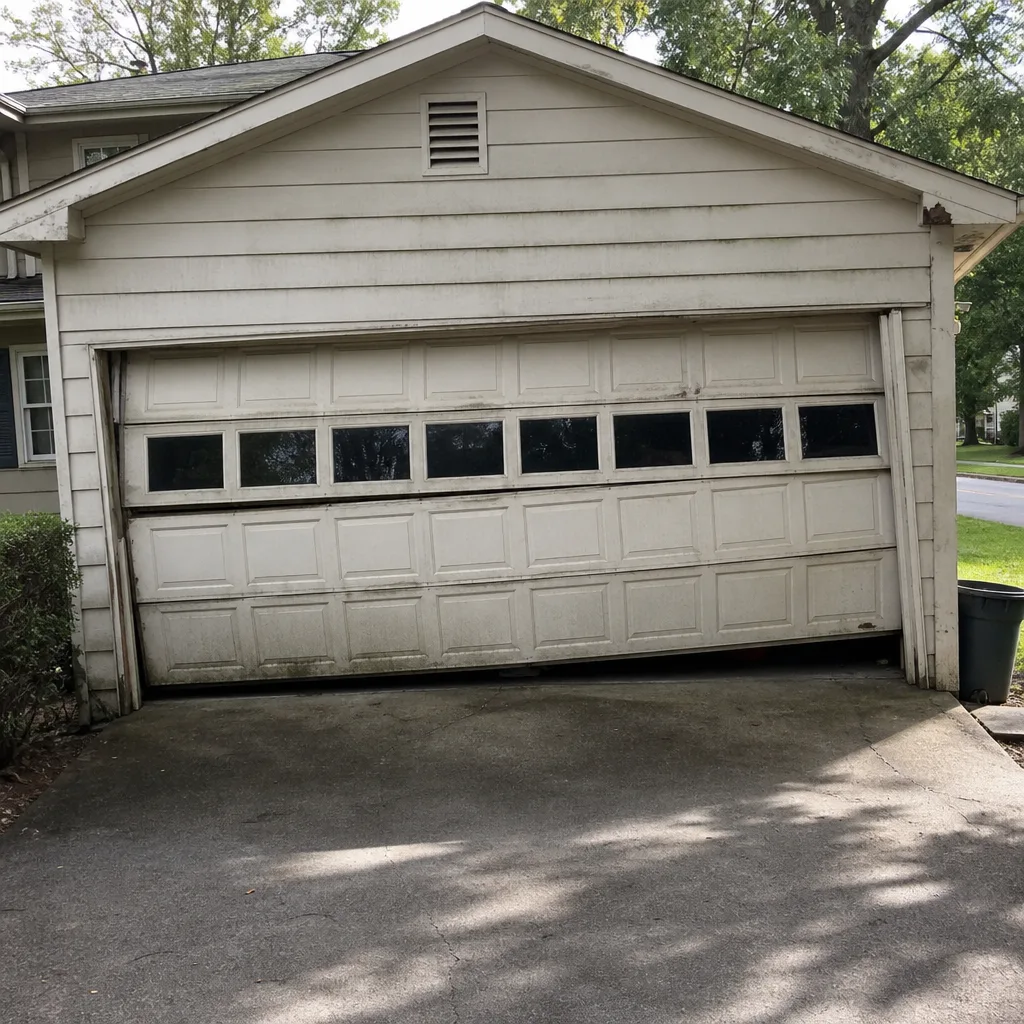 Before
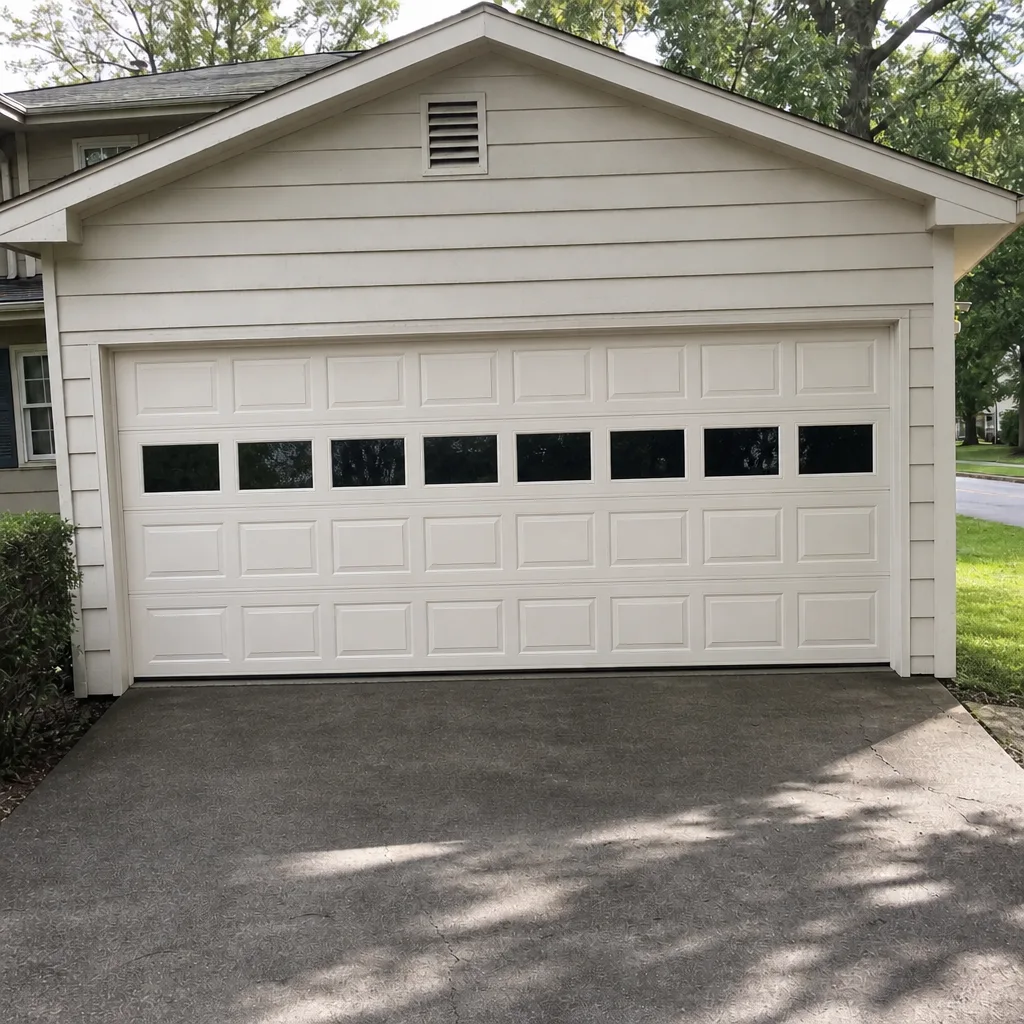 After
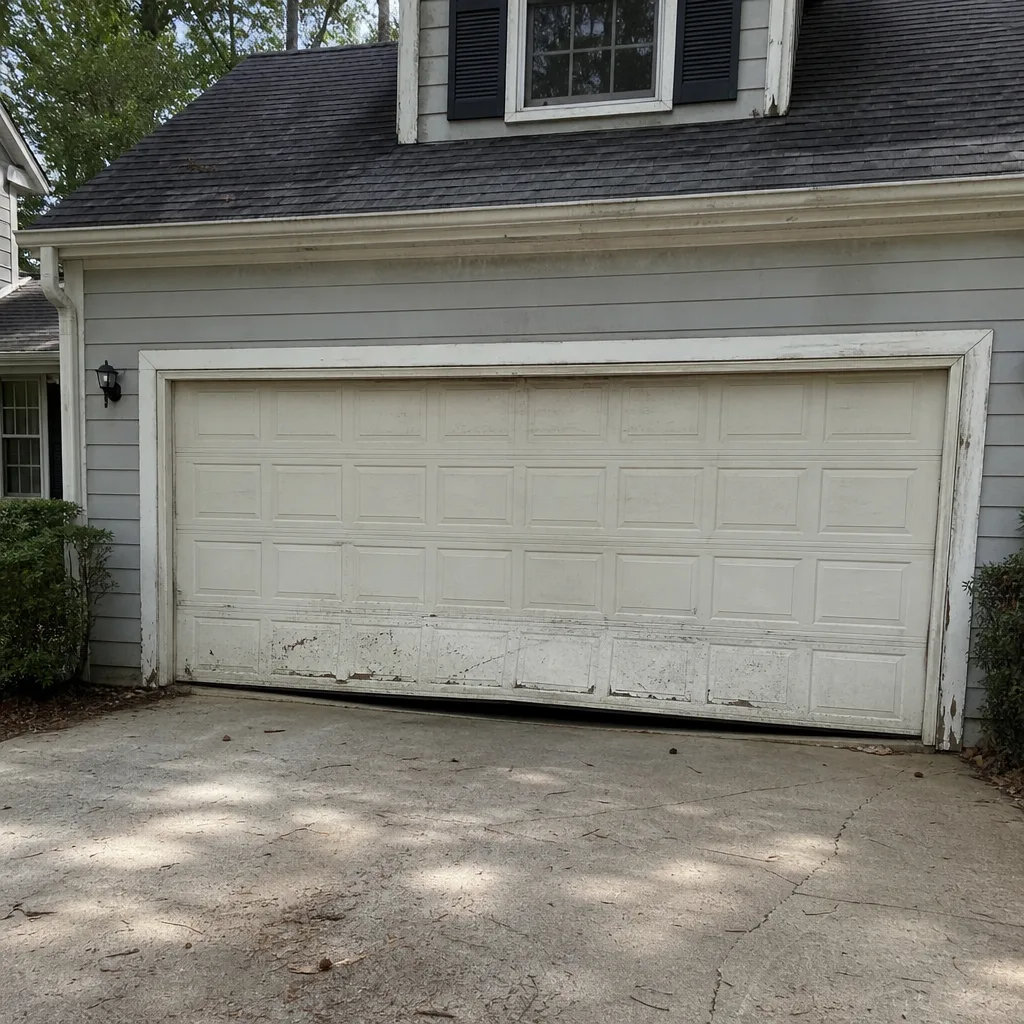 Before
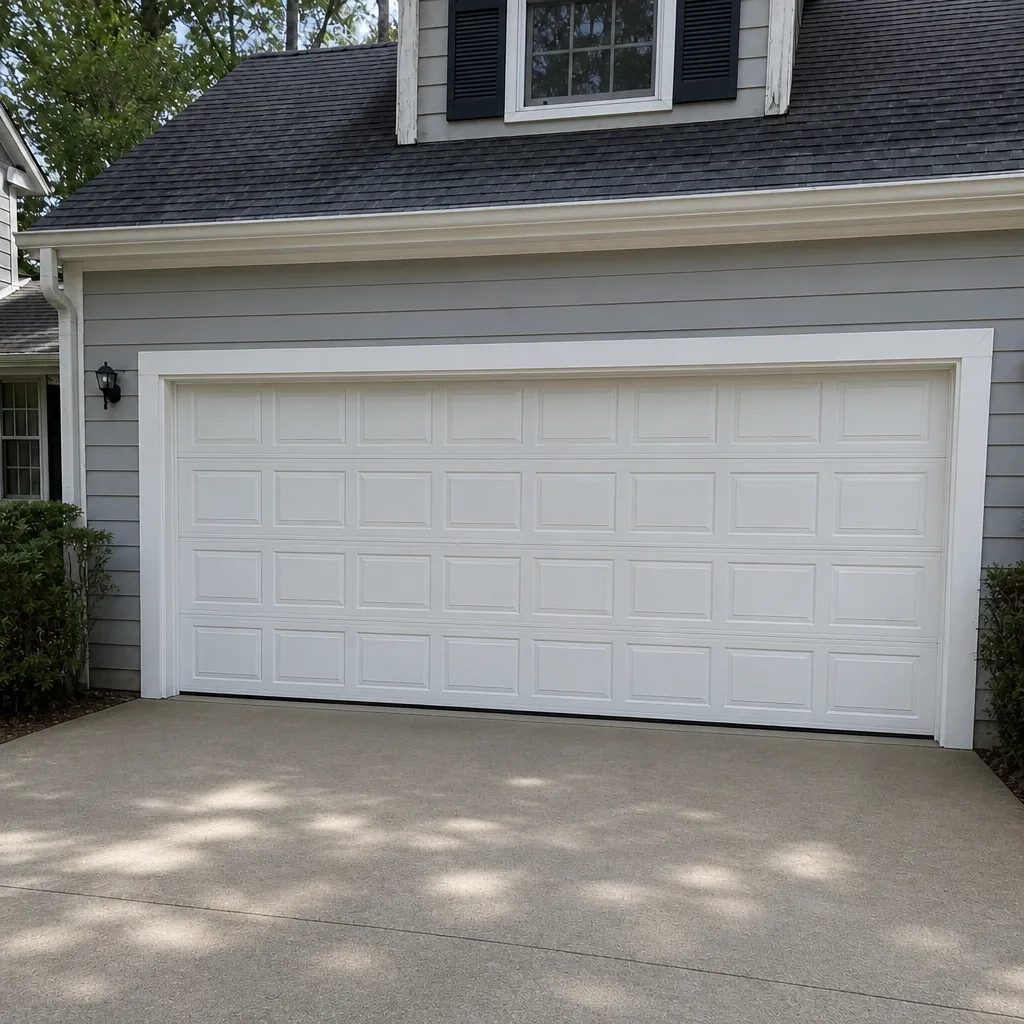 After
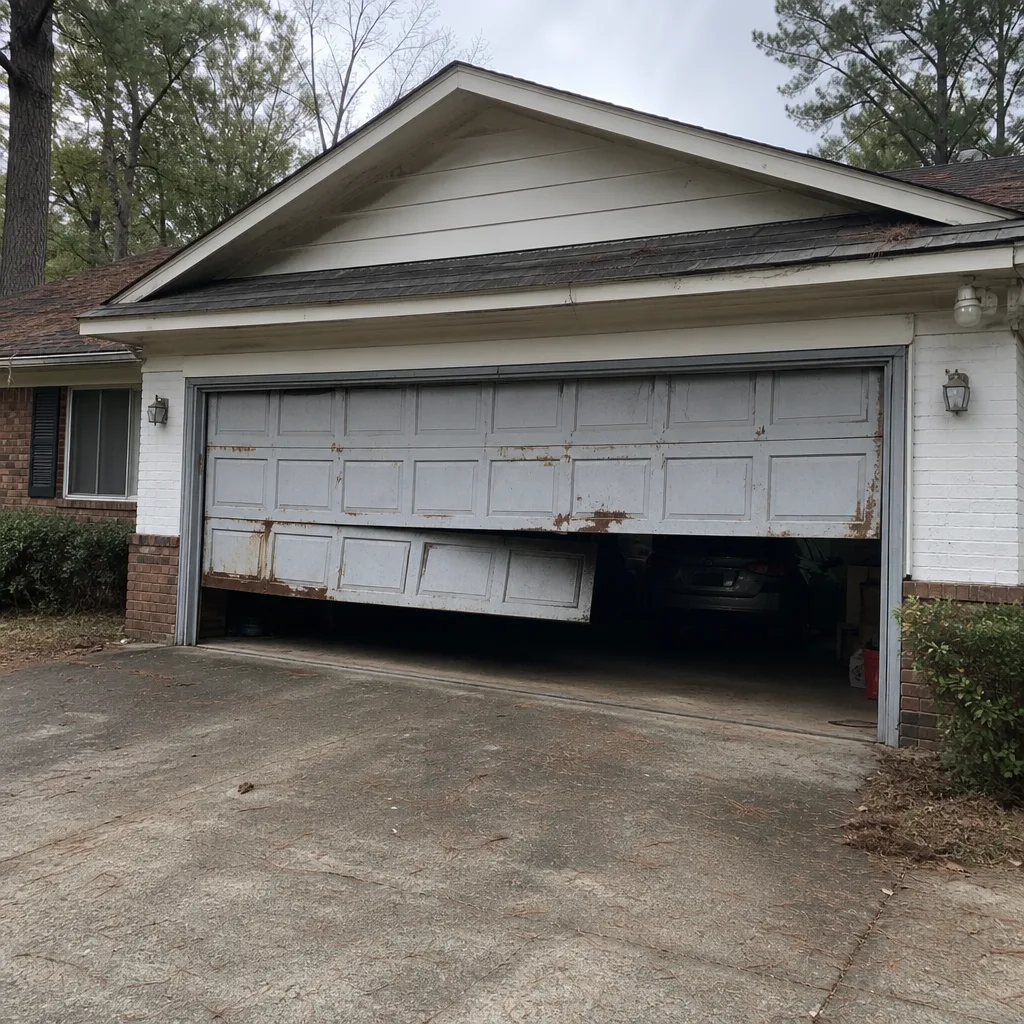 Before
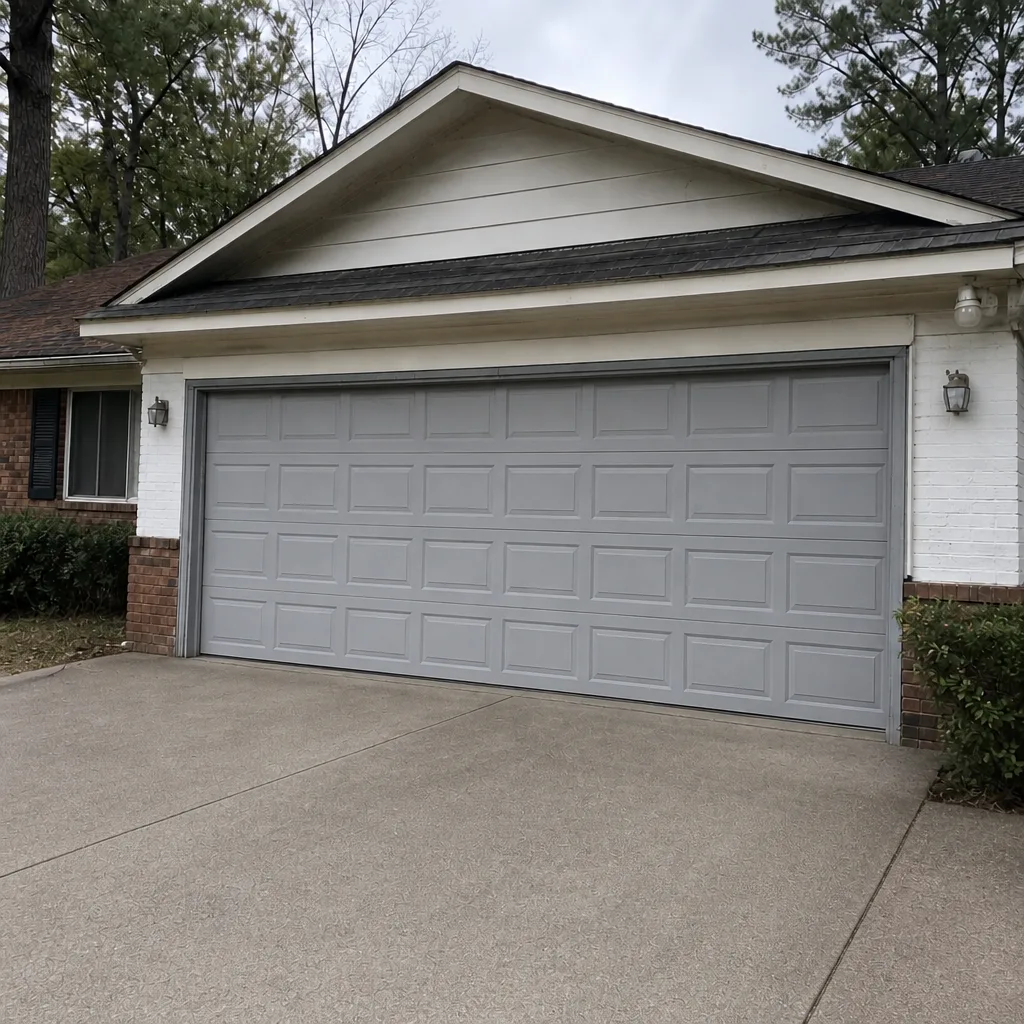 After
When to Call a Professional
Call us for anything involving springs, cables, opener force settings, or a door that’s come off its tracks. Those are the four things a homeowner shouldn’t adjust alone. If the monthly spring check shows a gap in the coil, a frayed cable, or a door that comes up crooked, that’s a call, not a wrench. If the safety reverse fails and you’re not sure how to reach the force settings on your opener, that’s a call. Same for a door that’s stuck in the open position with a car inside, or an opener that’s stopped responding after a power outage. Peachtree City Garage Door Repair offers free estimates in Peachtree City – call (866) 937-8190. We answer 24/7. Fast dispatch from 7am to 7pm, Sunday through Friday. When the door needs garage door repair, one call covers the spring, the opener, and the door.
Frequently Asked Questions
Once a year professionally, with monthly spring inspections and quarterly lubrication and testing on your own. The yearly service catches what you can’t safely check yourself, and the monthly checks catch what fails between visits. If your household runs the door more than four times a day, shorten the intervals by about a third.
Standard springs are rated for about 10,000 cycles, which works out to 7 to 10 years at average use. In Peachtree City, the humidity can contribute to surface rust on springs, which shortens that a little. A high-cycle household or a heavier door can wear through a spring in five years. The monthly visual is how you catch it before the snap. We answer 24/7 for spring calls – call (866) 937-8190.
It’s best not to. A torsion spring isn’t a bearing, and oiling it doesn’t extend its life – it just collects dust on a component under high tension. If the spring looks dry or rusty, that’s a reason to call a technician, not to apply oil. If you’re already calling us anyway for something else, we’ll take a look at the springs at the same time.
The monthly check is a 90-second visual from a safe distance, and the annual service is a full inspection with adjustments under load. You check for visible failures – gaps, fraying, crooked travel. The technician checks for fatigue, wear rates, opener settings, and track alignment that needs tools and training. Both matter; they cover different ground.
When the door panels are structurally damaged, when the door has come off its tracks and bent the framing, or when the total repair cost starts climbing toward replacement. A well-maintained Clopay or Amarr steel door can last a long time, and a Wayne Dalton door with wood-look panels holds up too. We’ll tell you which path makes sense when we quote the work.
Brand, model, and serial numbers for the door and opener; installation date if known; dates of every lubrication, spring check, and balance test; and a record of every repair. Keep it simple – a note on your phone works. When you call for service, you can tell us the history in 30 seconds and we’ll arrive already knowing the likely cause.
The Bottom Line
The best garage door maintenance schedule is built around cycles, not months. Check springs monthly, lubricate every season, test balance and safety reverse every quarter, and have a professional inspect the full system once a year. Skip the WD-40 and the track grease. Do the fall rebalance after Peachtree City temperatures drop, and prep the seals before the summer humidity hits. Keep a simple log so the next service call starts with context. If your door has reached a point where the maintenance checklist turns into repair, Peachtree City Garage Door Repair is one call from spring replacement through garage door repair and full door installation – call (866) 937-8190 for a free estimate.
Same-Day Repair and Service
When a spring snaps or the door won’t close, the monthly schedule becomes a same-day repair call. We answer 24/7. Fast dispatch from 7am to 7pm, Sunday through Friday. If a call comes in outside dispatch hours, we book it into the next opening. Bring your maintenance log if you have one – the history makes the diagnosis faster and gets you back up and running sooner.
Written by the team at Peachtree City Garage Door Repair.