
Last updated November 23, 2026
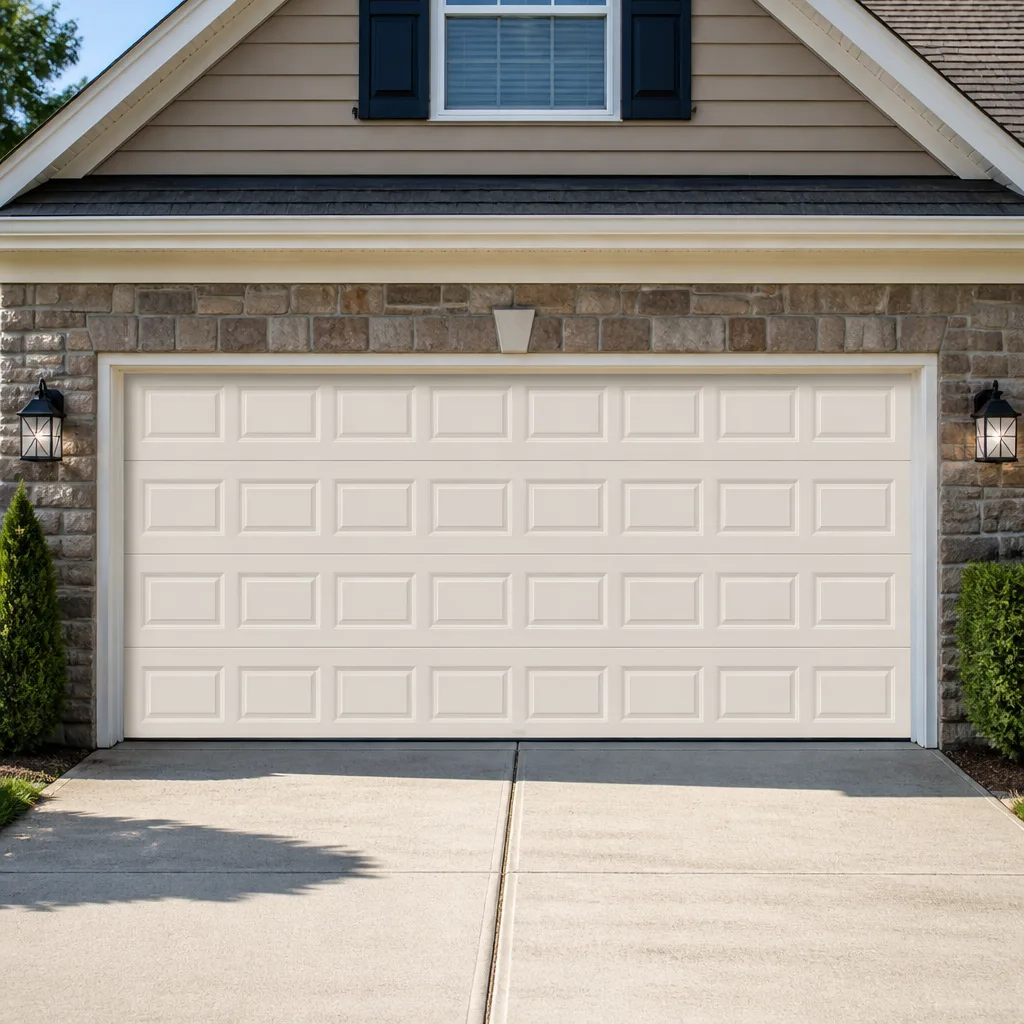 Raised-panel steel
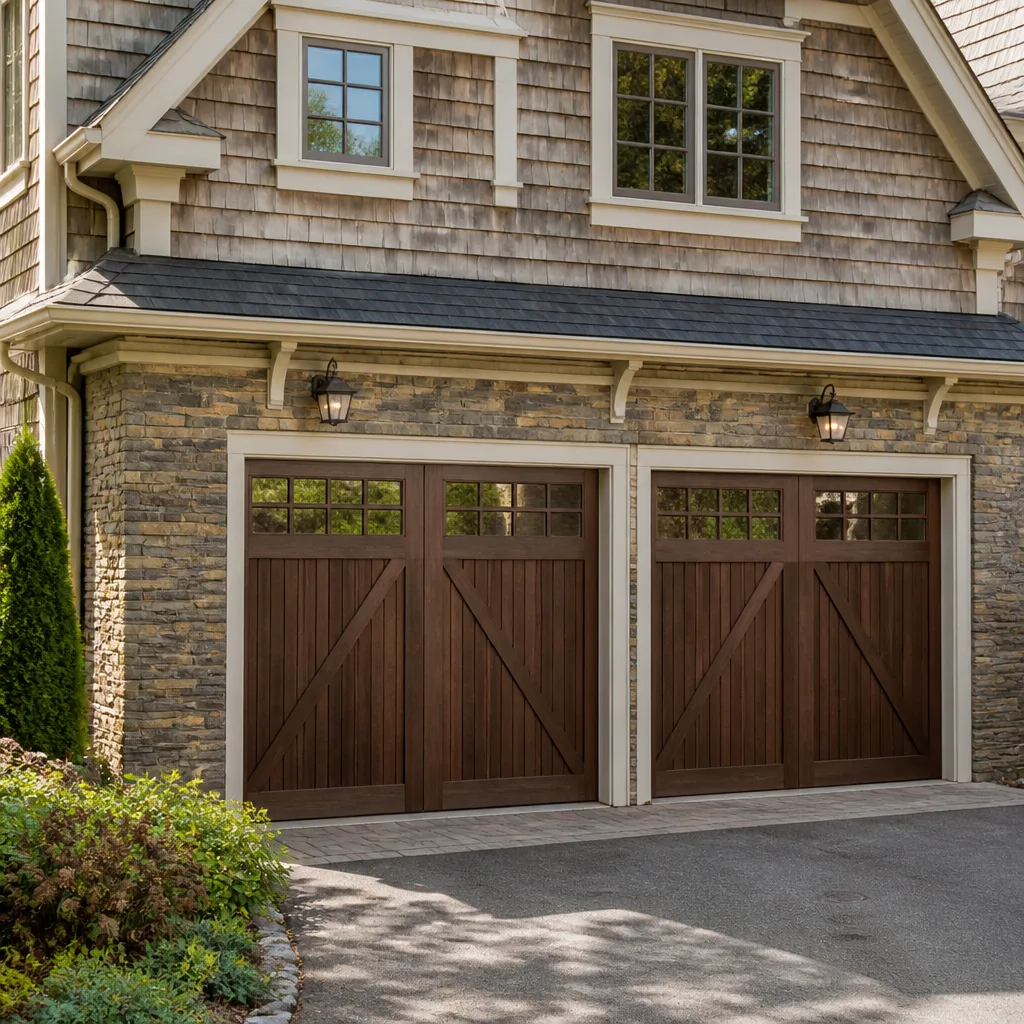 Carriage house
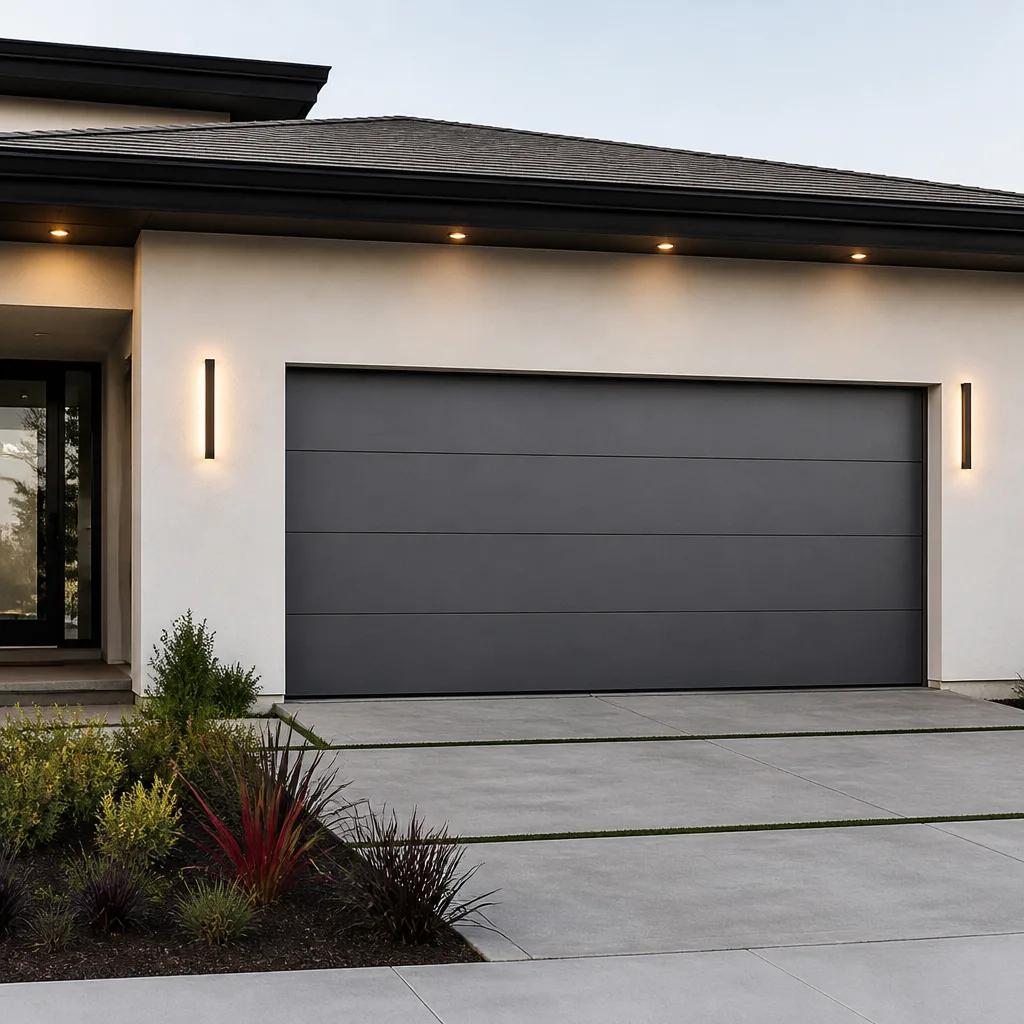 Modern flush
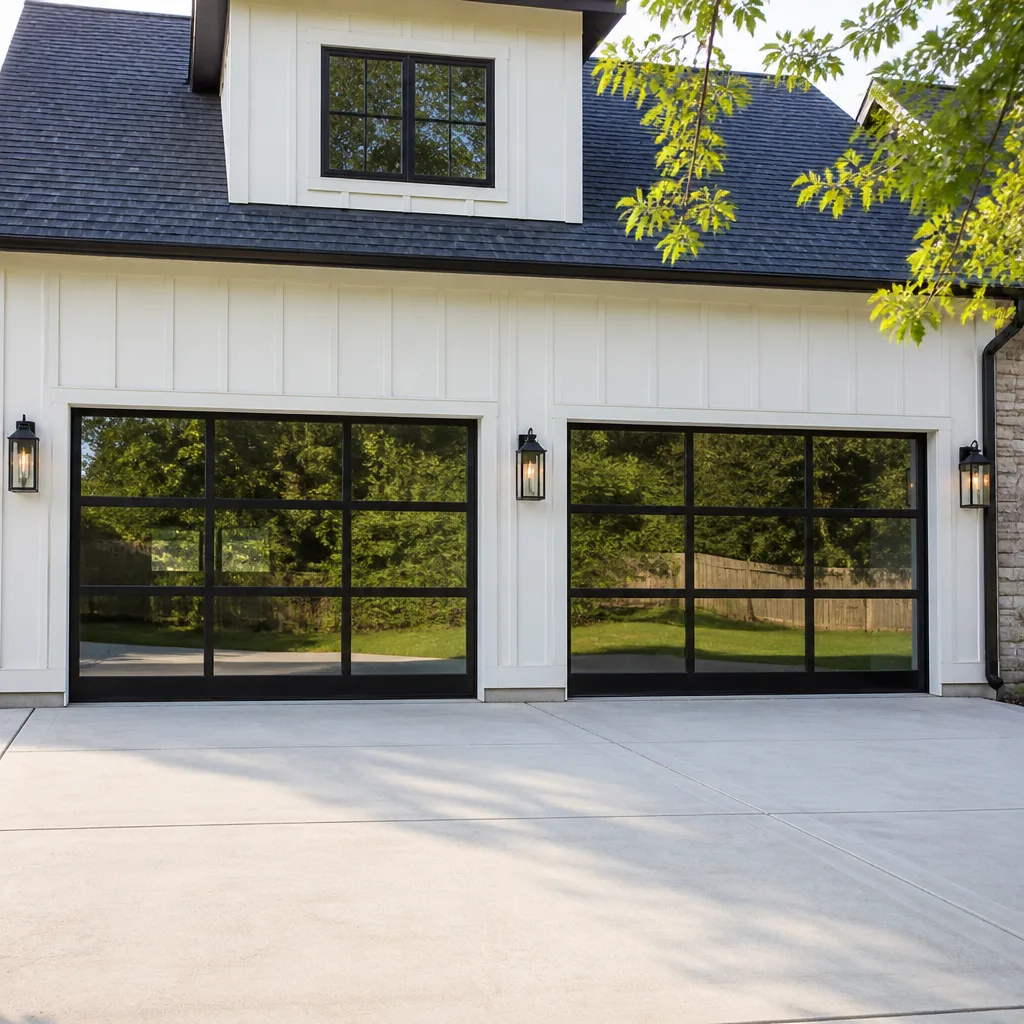 Full-view glass
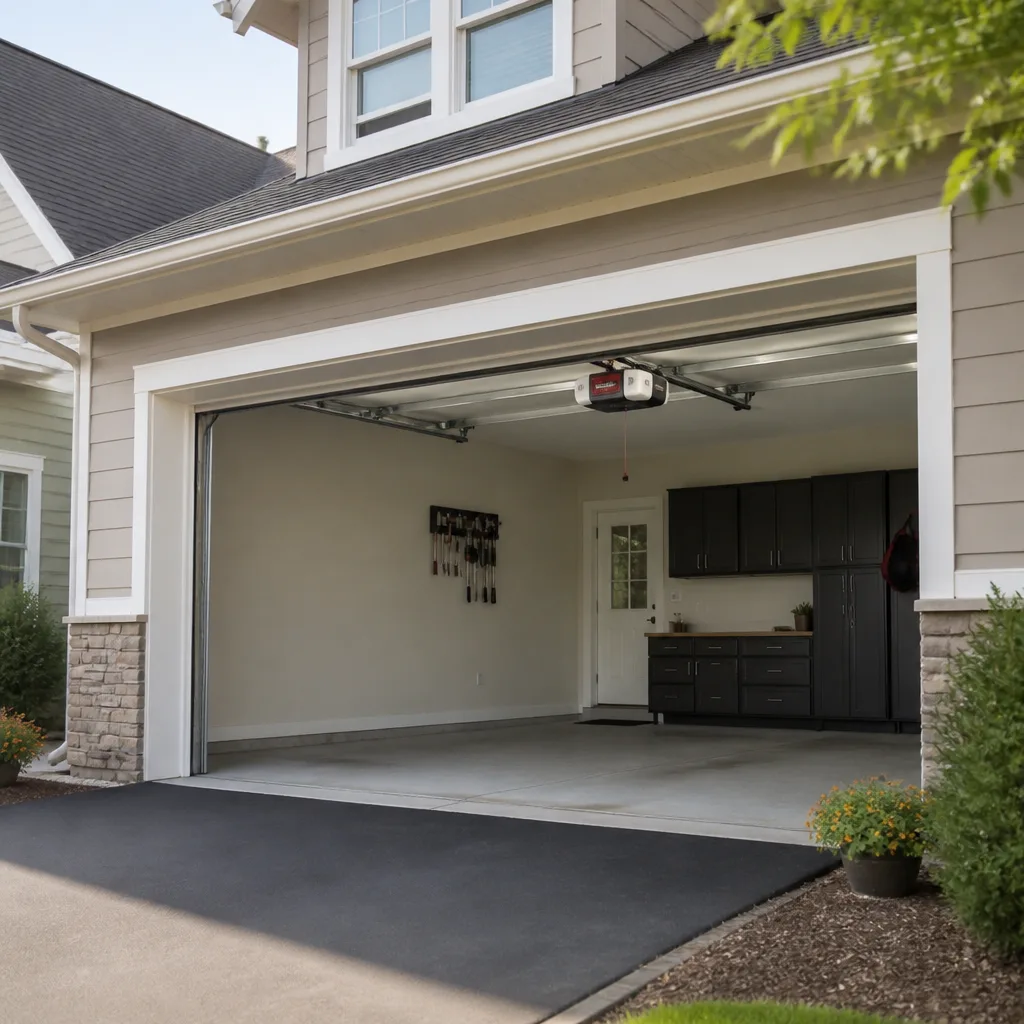 LiftMaster openers
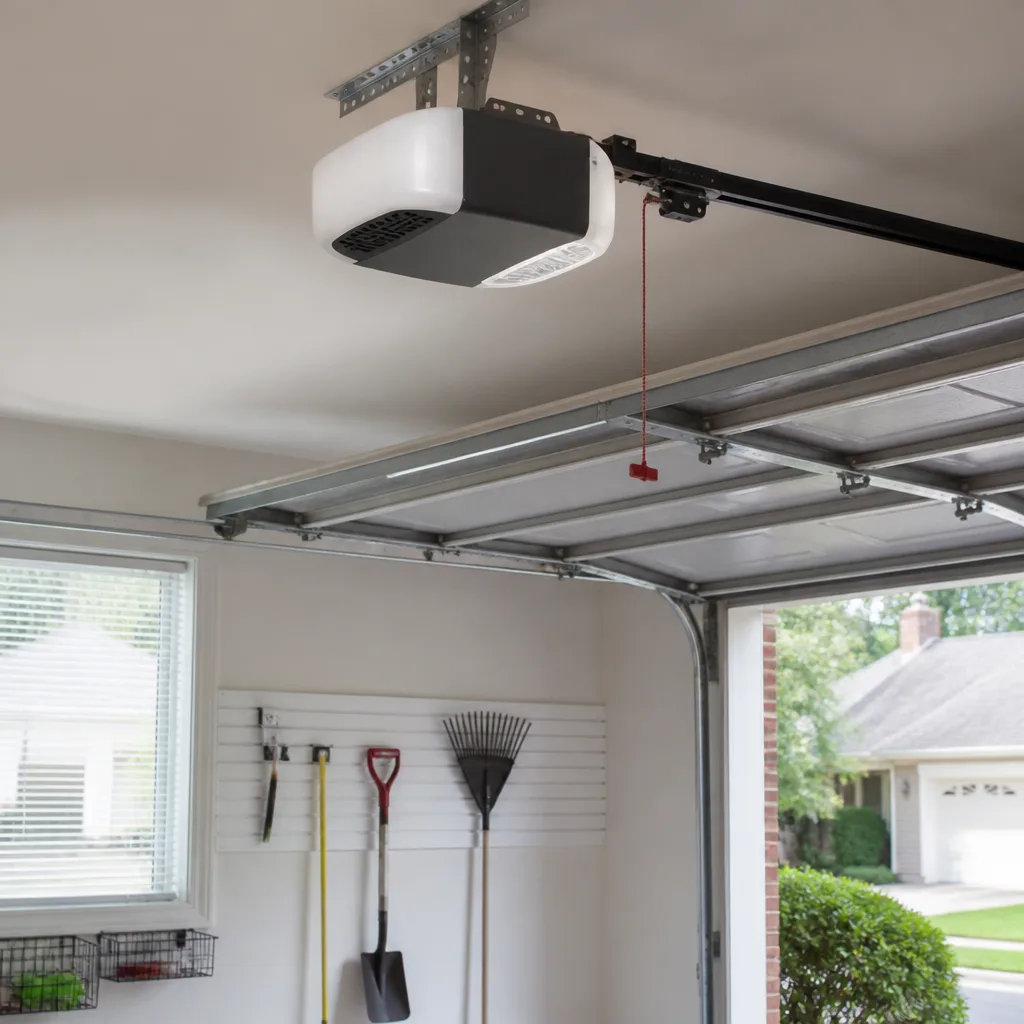 Chamberlain openers
Full 25-point door and opener safety check with every visit - springs, cables, rollers, tracks, and your LiftMaster or Chamberlain opener included
You get a price before we start. It does not change when the pro arrives.
Get your free estimateGarage Door Warning Signs: A Peachtree City Homeowner’s Reference Guide
Most homeowners describe every problem as “that weird noise my door makes.” That’s the mistake. A grinding sound and a scraping sound coming from the same door are two completely different failures, and one of them can wait a week while the other needs a technician today. What people usually do is wait until the door stops opening, then call. By that point, a worn roller or a loose track that would have been a minor fix has often taken a cable or a panel with it. This guide decodes what your door is actually telling you through sound, movement, and visual clues, so you can act on the right timeline. If you live in Peachtree City and your door is already making noise, you’ll finish this with a clear next step.
Quick Answer
Garage door warning signs fall into two groups: signals that need monitoring and signals that need same-day service. Grinding, rattling, and uneven panel movement usually mean worn rollers, loose hardware, or an out-of-balance door that can be scheduled. A gap in the torsion spring coil, a door that slams down, or a snapped cable are stop-using-the-door warnings. If any safety-critical sign is present, keep the door closed and call a professional before cycling it again.
Styles & brands we work with
- Raised-panel steel
- Carriage house
- Modern flush
- Full-view glass
- LiftMaster openers
- Chamberlain openers
Table of Contents
- What Your Door’s Sounds Are Telling You
- Visual Signs of Spring Failure
- Reading Your Opener’s Behavior
- The Asymmetry Test
- Warning Signs to Monitor vs. Warning Signs to Call On
- How Peachtree City Weather Affects Your Door
- A Seasonal Walk-Around for Peachtree City Homes
- When to Call a Professional
What Your Door’s Sounds Are Telling You
A sound is a symptom with a specific mechanical address. Here’s how to translate the four most common complaints into the component most likely responsible.
- Grinding – usually a roller with a worn or seized bearing, or a torsion spring that’s rubbing against its shaft. It can also point to a bent track that the door is dragging through. Grinding that gets louder over a few days is a component actively degrading.
- Popping – a loud pop, especially one followed by the door feeling lighter or the opener struggling, often means a torsion spring has broken. A single pop at the top of travel can also be a cable jumping its drum. Both are stop-and-call situations.
- Rattling – loose hinges, loose bolts on the section brackets, or a panel that’s vibrating against its neighbor. Single-digit-dollar hardware, but left alone, vibration works bolts loose until a hinge fails under load.
- Squealing – metal-on-metal friction, typically a dry torsion spring or a dry bearing plate. Sometimes it’s a nylon roller that has worn through to its steel core. Squealing is the one sound that’s often genuinely harmless to monitor, provided you schedule lubrication or a roller swap soon.
What matters is that you match the sound to a category, not a panic level. A squeal in July in Peachtree City is often just dry hardware in the heat. A pop followed by a door that feels unusually heavy is a broken spring, which means the door is now dead weight held by the opener alone. In our experience, the biggest miss is the homeowner who hears grinding, ignores it for a month, and ends up needing more than a roller replacement because the drag wore through a cable. If you’re hearing something now and can’t place it, garage door repair starts with a diagnostic visit that tells you exactly which component is making the noise before anything gets replaced.
Visual Signs of Spring Failure
Torsion springs, which sit on a shaft above the door, are the most safety-critical component in the system. They’re under extreme tension and store the energy that lifts the door. You can look at them without touching them. Before you look, keep the door closed and don’t reach into the mechanism; a trained technician handles spring work because a spring under load can release suddenly and cause serious injury.
Here’s what to look for on a torsion spring:
- A gap in the coil. Run your eye along the length of the spring. The coils should sit tight and even. A visible gap between coil turns means the spring has already partially fractured and is holding on borrowed time. This is the single most important visual signal and the one most homeowners miss.
- A crooked or sagging spring. If the spring isn’t sitting straight on the shaft, it’s under uneven load.
- Rust streaks on the spring or the shaft. Corrosion weakens the wire and warns of an imminent break.
- The door feeling twice as heavy. Lift the door a few inches by hand with the opener disengaged. If it takes real effort, the spring has lost tension or broken.
Extension springs, mounted along the sides of the door, fail differently. Look for a stretched spring longer than its pair, a spring that has lost its shape, or a spring that’s come off its track. Extension springs often fail without warning, which is why a partial fracture on a torsion spring is a gift: it tells you before the break.
If you see a gap-in-coil or a crooked spring in Peachtree City, stop cycling the door and schedule a spring replacement. That’s the moment when garage door spring repair is still a straightforward job rather than a recovery from a fallen door.
Reading Your Opener’s Behavior
Openers fail in patterns. On a LiftMaster, a Chamberlain, a Craftsman, or a Raynor, the behavior usually points to one of three things: a safety sensor problem, a force-setting problem, or a failing logic board or motor. Matching the behavior to the brand helps a technician skip the guesswork and check the right part first.
- Reverses mid-travel. The door starts down, then stops and returns to the open position. This is almost always the safety sensors: misaligned, dirty, or blocked by something in front of the eye. It can also be a force setting that’s too sensitive. Clean and realign the sensors first, and if the reversal continues, the issue is in the opener logic.
- Stops without reversing. The door travels partway and stops dead, with no return. This usually signals a force-limit trip or a logic fault. If it stops at the same spot every time, the mechanism is binding on something, and the opener is refusing to force it. That’s a mechanical problem showing up as an opener symptom.
- Slows noticeably in cold weather. Cold thickens the grease in the opener and stiffens the door’s springs and rollers. A door that’s slightly out of balance or has a spring that’s lost some tension will struggle more in a cold snap. The opener isn’t failing; it’s fighting extra resistance. That’s a signal to check the balance and lubrication before colder months, not a reason to replace the opener.
- Runs but the door doesn’t move. The opener is working and the door isn’t. That points to a stripped gear, a broken belt or chain, or the manual release being engaged. A failed gear on an older Craftsman is a common find.
If your opener keeps reversing or stopping partway, garage door opener repair is the right call, and it’s a good time to have the door’s mechanical system checked at the same time. Openers don’t fail in isolation; they fail against a door that’s asking too much of them.
The Asymmetry Test
An out-of-balance door is the leading cause of cable failure and opener wear, and most homeowners don’t notice it until something snaps. Here’s how to spot it without touching anything: stand to the side and watch the door through its full opening cycle, then close it and watch again.
- Watch each panel. The panels should rise together as one flat surface. If the left corner lags behind the right, or one panel sits higher than its neighbor at the top of travel, the door is out of balance or a cable is stretching on one side.
- Watch the gap at the bottom. If the gap between the door and the floor is wider on one side at the mid-point, the door is riding crooked.
- Listen for a click or a bump. A door that drops slightly at the top of the cycle or bumps on its way down is losing tension on one side.
- Test the manual balance. With the opener disengaged, lift the door to waist height and let go. A balanced door holds position. A door that slowly rises on its own is over-sprung; one that drifts down is losing spring tension. Don’t do this test if you’ve spotted a spring gap or heard a pop.
Any asymmetry is a signal that one side of the system is carrying more load than the other. The imbalance itself isn’t the failure; the failure is what happens when one cable takes up the slack and snaps. In our experience in Peachtree City, a door that’s watched through the cycle twice a year catches an imbalance before it becomes a cable job.
Warning Signs to Monitor vs. Warning Signs to Call On
Triage is the skill that saves homeowners the most money. Not every symptom needs a same-day visit; some are genuinely fine to watch for a week. Here’s the framework we use.
Safe to monitor:
- Squealing or light grinding when the door runs, without any change in door speed or balance.
- Rattling or loose hardware you can identify by eye.
- A single slow spot in the cycle that’s consistent from day to day.
- Cosmetic panel dents and scuffs that don’t affect the door’s movement.
Call the same day:
- A visible gap in the torsion spring coil or a crooked spring.
- A cable that’s come off its drum, is frayed, or is hanging loose.
- A door that won’t close flush, slams down, or drops on one side.
- A door that’s stuck open with a vehicle trapped inside.
- A loud pop followed by a door that won’t lift or feels much heavier than before.
- An opener that reverses repeatedly while something is underneath the door.
The line is simple: anything that affects balance or tension calls today; anything that’s friction, noise, or hardware calls this week. Emergency garage door service exists for the “call today” group, where a stuck door is a security problem or blocks the only exit for a car. If you’re unsure which group your symptom belongs to, call and describe the sign. We answer 24/7. Fast dispatch from 7am to 7pm, Sunday through Friday.
How Peachtree City Weather Affects Your Door
Peachtree City’s climate is a real factor in what fails and when. Piedmont summers bring high heat and humidity, and the garage is typically the hottest space in a Peachtree City home. Heat expands the door’s steel and vinyl and thins the grease in your opener. That’s why a door that runs quietly in spring can start squealing in July, and why your LiftMaster or Chamberlain may sound labored in the late afternoon.
Winter is the other end of the scale. Cold snaps stiffen springs and rollers and bring a wave of slow or reversing openers. It’s rarely the opener itself; the door is simply harder to move in the cold. Checking balance and lubrication before the first cold front keeps those cold-morning complaints from becoming a repair call.
The spring and fall storms that move through the area are the third factor. Wind load on a door that’s out of balance accelerates cable wear. A loose track after a windy period is common. Most garage door work doesn’t require a permit, but any structural change to the opening does, so ask Peachtree City’s building department before a repair turns into a rebuild. We’ve seen enough Peachtree City doors across the seasons to know the same three drivers show up year after year: heat, humidity, and wind.
A Seasonal Walk-Around for Peachtree City Homes
You don’t need to go near the spring mechanism to catch most problems. A walk-around twice a year, matched to the seasons, catches the warning signs before they become failures.
- Stand outside and watch the door. Run it up and down and watch for panel lag, crooked travel, or an uneven gap at the floor.
- Look along the tracks. The tracks should be straight and clear. A track that’s bent or loose is dragging the door.
- Check the rollers and hinges. Look for rollers with worn bearings, hinges with loose screws, and brackets that are shaking. These are the cheap fixes worth doing before they stress a cable.
- Look at the springs from a distance. Only look: check for a gap in the coil, rust, or a crooked spring on your Clopay or Amarr door.
- Clean the safety sensors. Wipe the eyes at the bottom of the tracks and make sure nothing is blocking the path.
- Test the auto-reverse. With the door closing, wave an object in front of the sensors. It should reverse. If it doesn’t, stop using the door until it’s fixed.
Twice a year is enough. Doing it before summer and before the first cold snap keeps the walk-around matched to the two seasons that do the most damage in Peachtree City.
See the difference
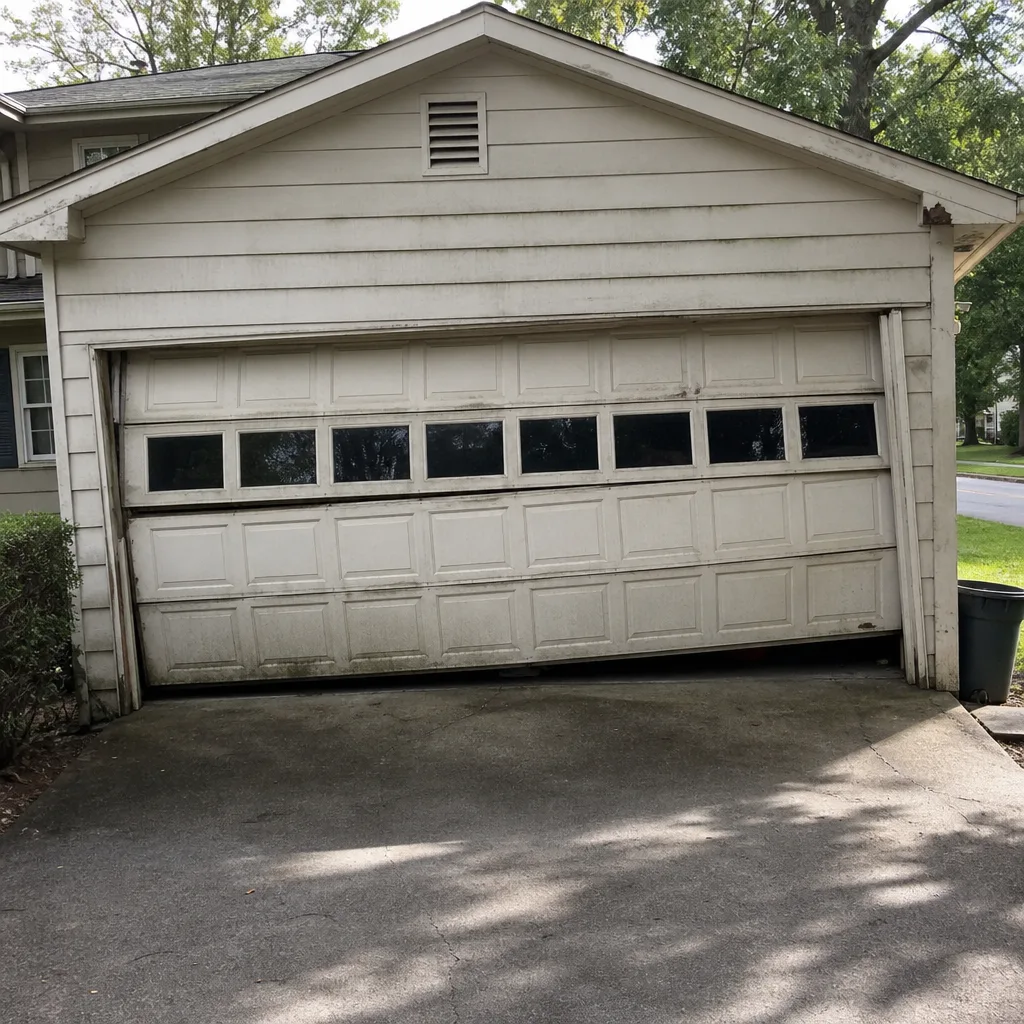 Before
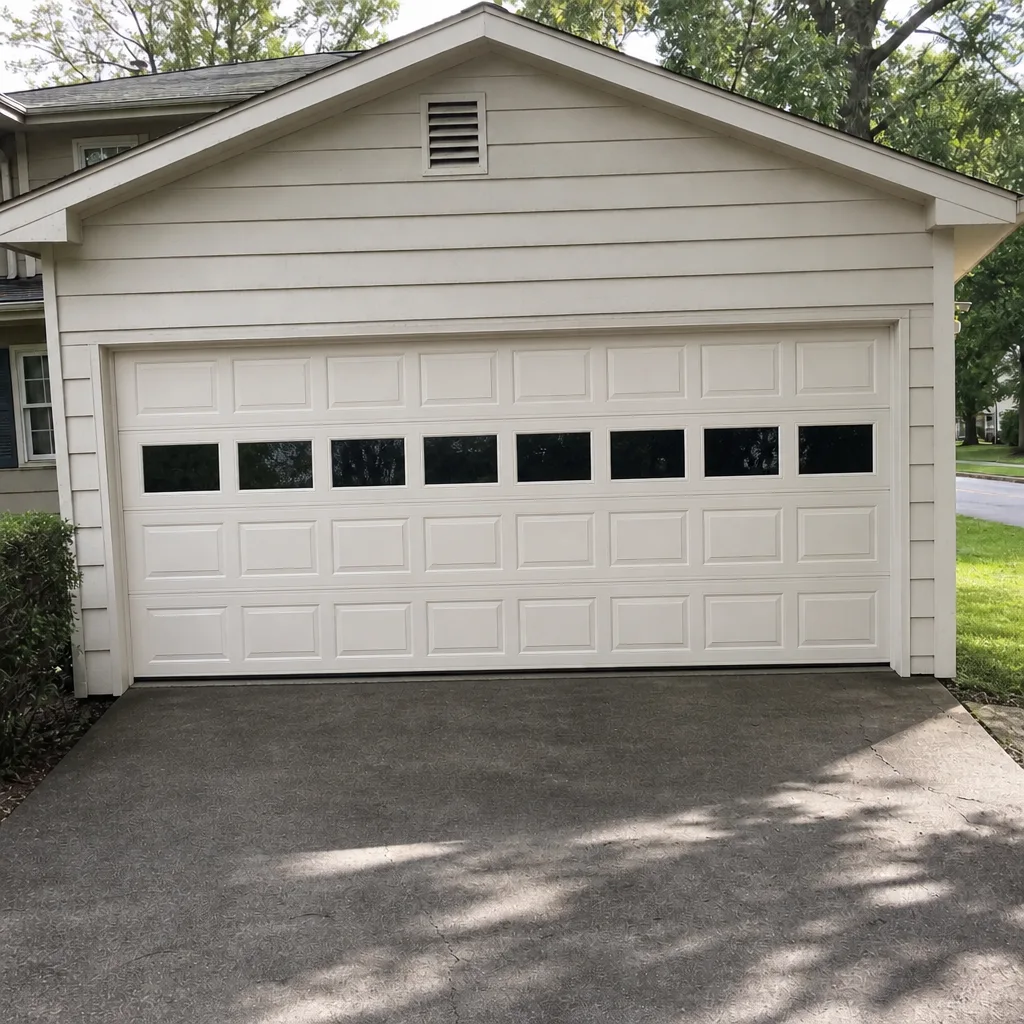 After
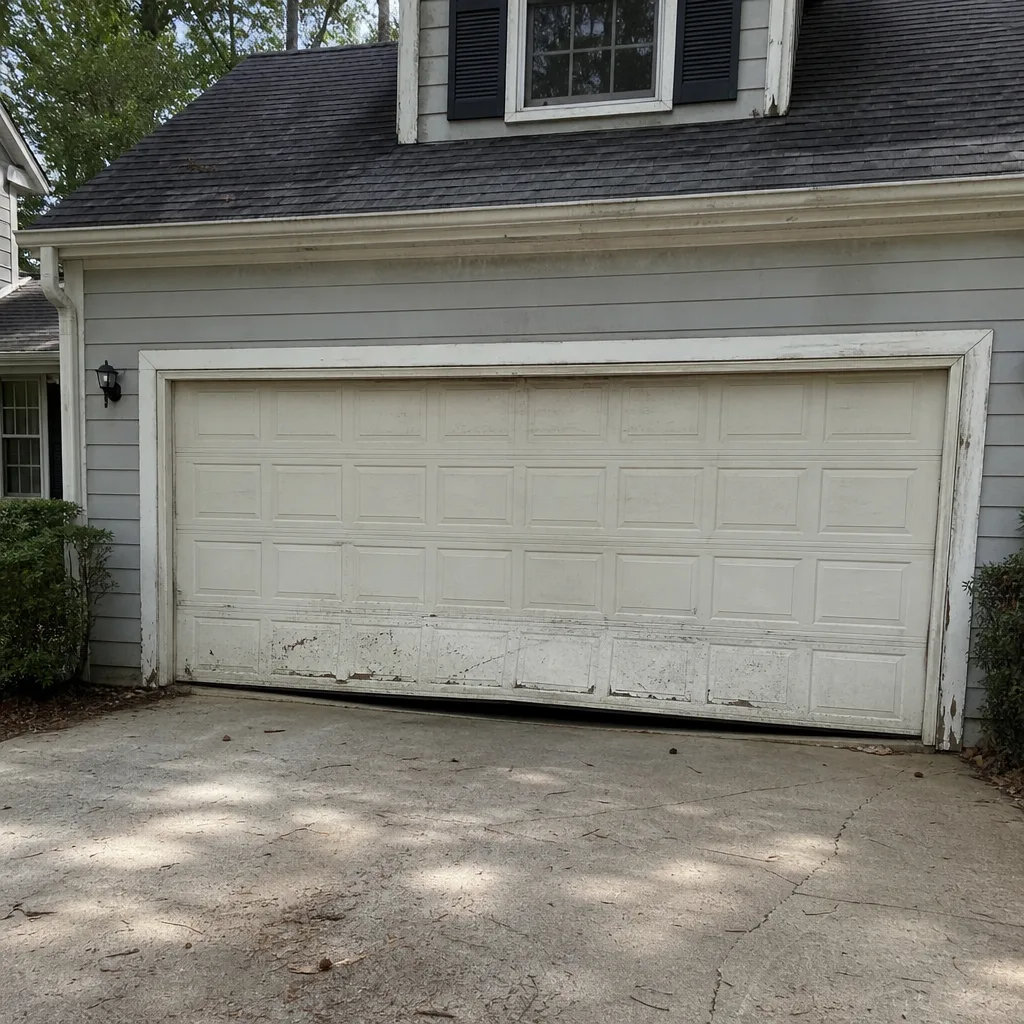 Before
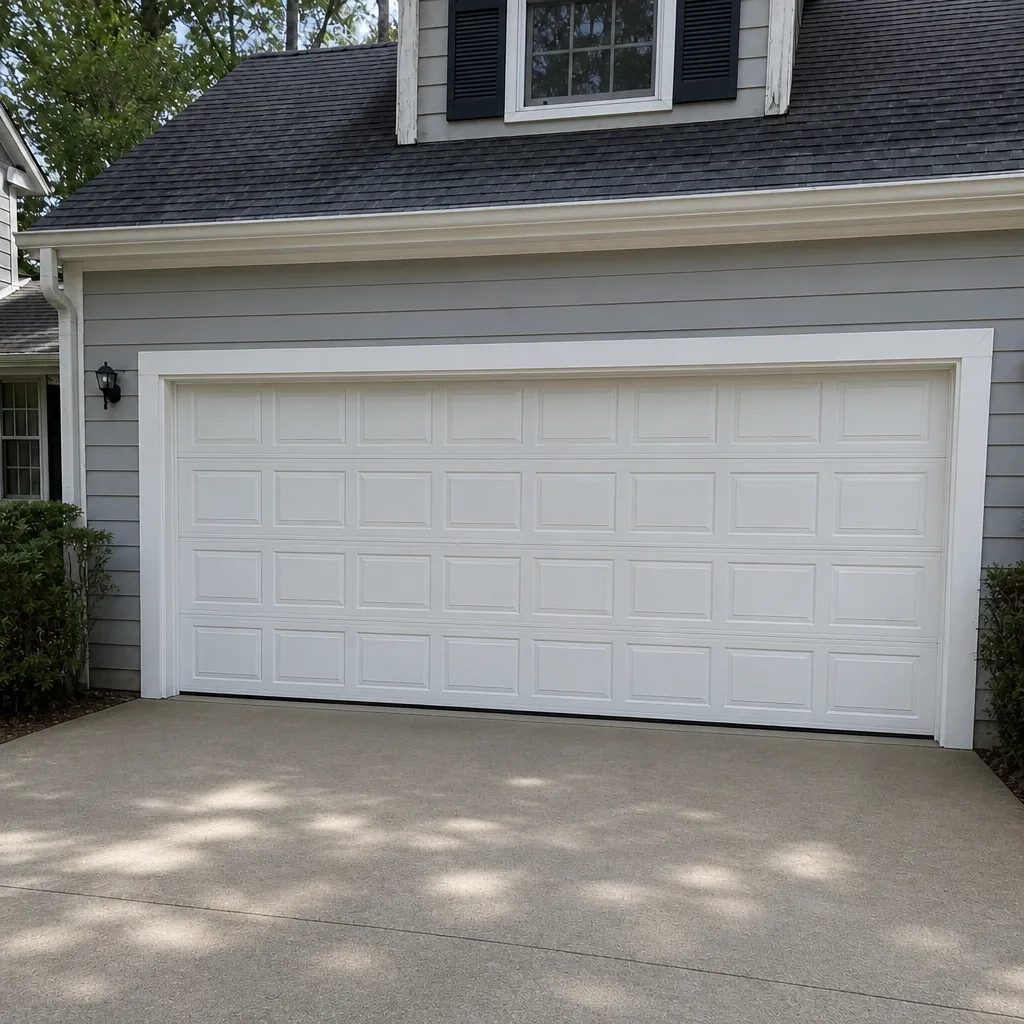 After
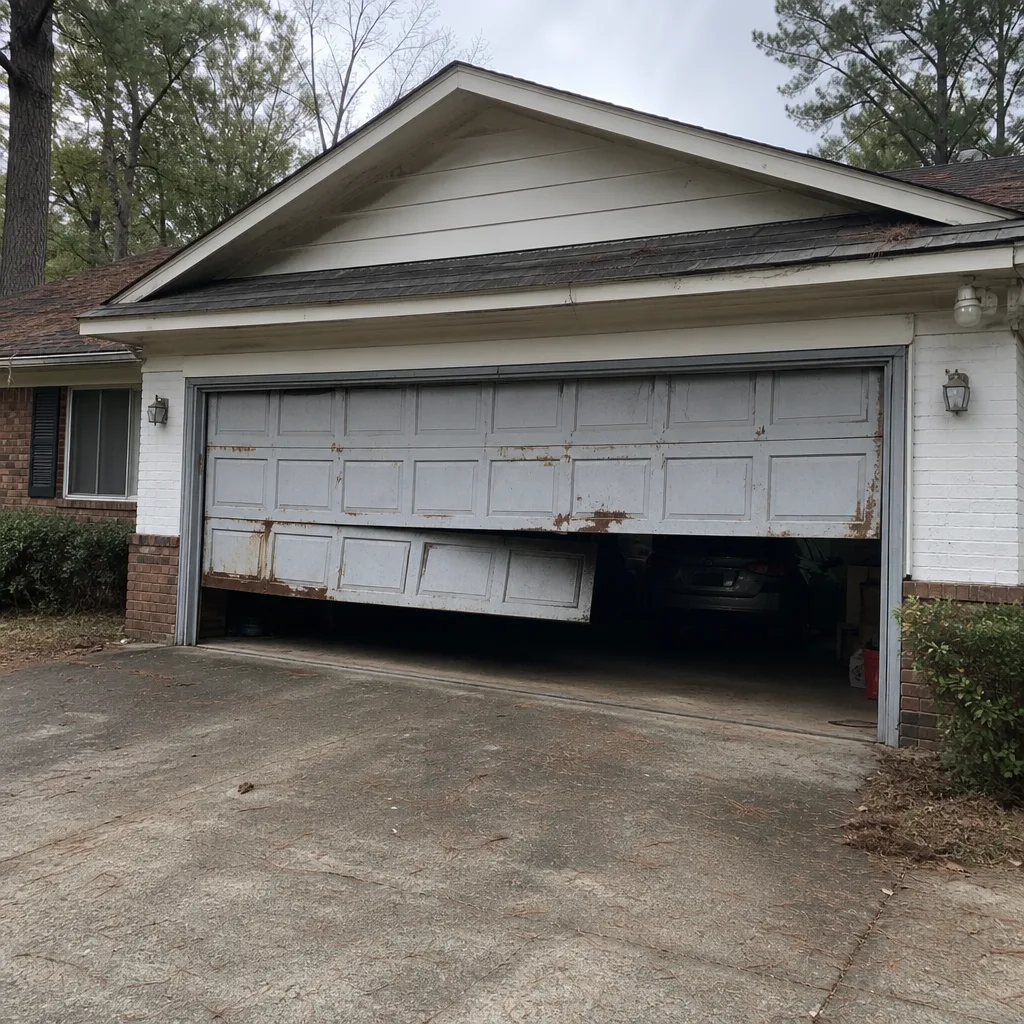 Before
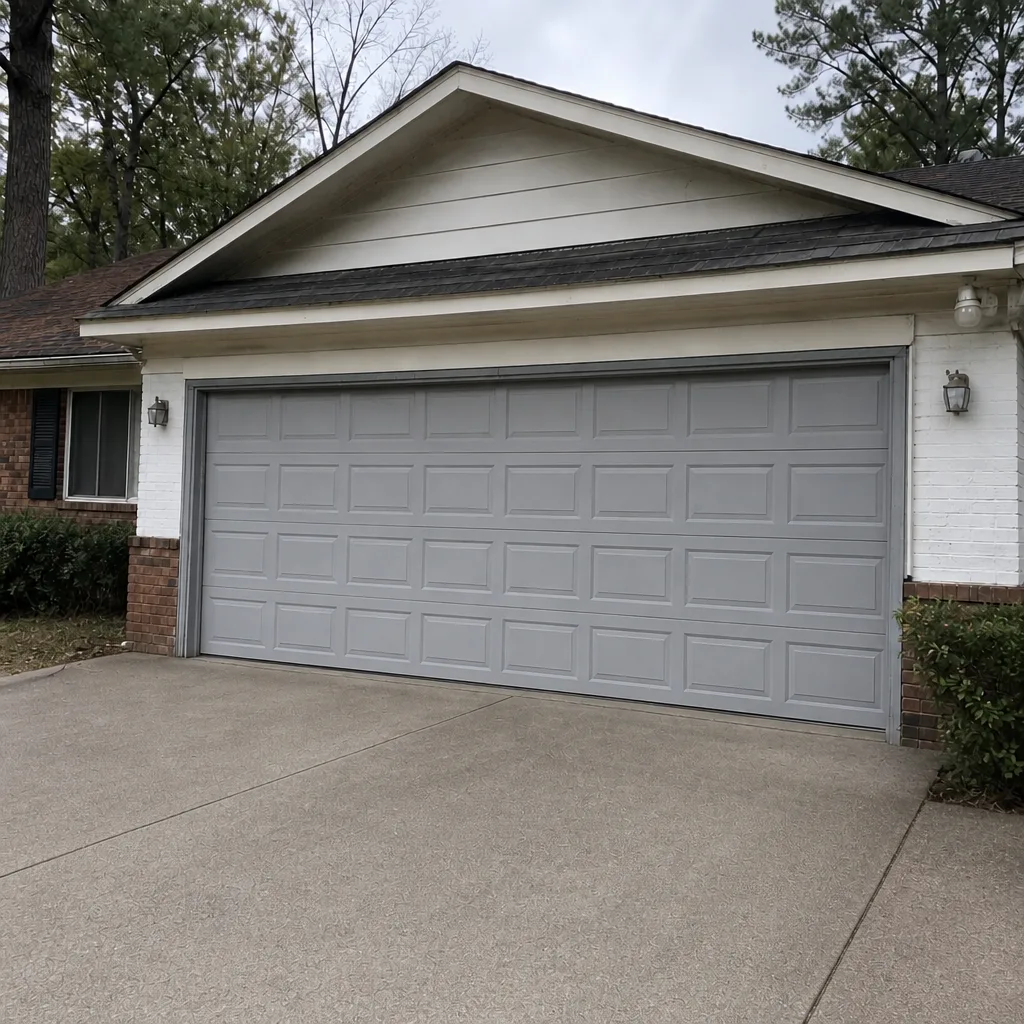 After
Common Mistakes to Avoid
- Treating every noise as one problem. Grinding and popping point to different components and different timelines. Categorize the sound before you call.
- Ignoring a gap in the spring coil. This is the cheapest warning you’ll ever get. A partial fracture means a break is coming, and catching it early is a spring job, not a recovery.
- Putting grease on the tracks. Tracks should stay clean and dry. Grease attracts grit that wears the rollers and makes the door drag.
- Adjusting the opener’s force setting to force a struggling door. If the door is out of balance, raising the force setting doesn’t fix the cause; it drives a strained mechanism harder.
- Testing the manual release on a door with a broken or sagging spring. A door held up by a broken spring becomes dead weight when the opener is disengaged. Keep it closed and call.
- Assuming a slow opener in cold weather means a dead opener. In Peachtree City, cold-morning slowdown is usually a door issue showing up through the opener.
- Waiting for the door to stop opening entirely. That’s the end stage, not the beginning. Most of the signals on this page show up weeks before the failure.
When to Call a Professional
Call a professional when the symptom involves tension, balance, or anything electrical. That means a spring with a visible gap, a cable that’s off its drum, a door that drops on one side, an opener that reverses with nothing in the way, and any door that’s stuck open with a car trapped inside. Spring and cable work is genuinely dangerous: the stored energy in a torsion spring can release without warning, and a trained technician has the right tools and knows the sequence. If the door is stuck open and your home isn’t secure, that’s emergency territory. If your door is already showing signs on this list, don’t push it open to get the car out; call first. Peachtree City Garage Door Repair offers free estimates in Peachtree City. Call (866) 937-8190. We answer 24/7. Fast dispatch from 7am to 7pm, Sunday through Friday.
Frequently Asked Questions
The most common are grinding, rattling, uneven panel movement, a slow opener in cold weather, and a visible gap in the torsion spring coil. Grinding and rattling usually mean worn hardware; the gap in the spring coil means a break is coming. Call (866) 937-8190 for an exact diagnosis and a free estimate.
Typical spring repair in Peachtree City runs $180-$340 for a single spring, and a matched pair is usually replaced together, so it costs about twice that. A technician quotes the job after seeing the door, and the written estimate sets the final price before any work begins. Call (866) 937-8190 to schedule a free estimate.
No, but it should be fixed before you use the door normally. A mid-travel reversal is almost always the safety sensors: dirty, misaligned, or blocked. If cleaning and realigning the sensors don’t stop it, the issue is in the opener’s logic. Call (866) 937-8190 for an exact quote on opener repair.
No. Torsion and extension springs are under extreme tension and can release suddenly, and DIY spring work causes serious injuries every year. A trained technician has the winding bars and the correct procedure. If your spring has a gap or a pop has happened, keep the door closed and call us.
Watch each panel through the opening cycle and check for a corner that lags or a panel that sits higher than its neighbor. If one side lags, or the door drops slightly at the top, it’s out of balance. Call (866) 937-8190 if you see it; an imbalance stresses the cables until one fails.
Yes. If your door is stuck open, won’t close, or blocks your car, call us. We answer 24/7. Fast dispatch from 7am to 7pm, Sunday through Friday, and any call outside dispatch hours is booked into the next opening. Call (866) 937-8190.
The Bottom Line
Your garage door tells you what’s failing before it fails, and the key is matching the sound or sign to the component. Grinding and rattling are usually worn hardware you can schedule. A gap in the spring coil, a door that drops on one side, or a pop followed by a heavy door are stop-and-call signs. Watch the door’s cycle twice a year, check for spring gaps and imbalance, and don’t force a struggling opener to work harder. In Peachtree City, heat, humidity, and storm wind all accelerate wear, so a twice-yearly walk-around pays for itself. If you find a critical sign, call (866) 937-8190 for a free estimate. We answer 24/7. Fast dispatch from 7am to 7pm, Sunday through Friday.
Written by the team at Peachtree City Garage Door Repair.